Don’t be happy with this attention and care
The government has a cocoon program
Oh, mulberry seedlings
.
Don’t be happy with this attention and care
The government has a silk program
Oh, silkworms
.
Don’t be happy with this attention and care
The government has a credit plan
Oh, weaver women
.
Just now
In some expensive hotel
Under the silk blanket
Whoever is having fun
Let them be happy
You worked instead of them
You died instead of them
At least don’t be happy instead of them
Every successful person follows their dreams, takes risks others would not dare, and accepts the sacrifices they may have to make along the way.
As a poet, I do not concern myself with my immediate surroundings, the local literary environment or the marketable products that environment demands. Literary thinking here is local, not global.
It is no coincidence that Azerbaijanis are known as a nation of poets, or that the Gazakh region, where I live, is called a land of poets. Yet no poets here think globally. They are content when mediocre singers set their poems to music, and they delight in hearing wedding hosts recite them. Those with strong public-speaking skills may even become wedding hosts themselves. They squander their talent entertaining the masses.
Worse still, they seek respect by flattering those in power.
In short, they turn Pegasus, the famous winged horse, into a beast of burden for the masses and the authorities. Instead of letting Pegasus soar toward the moon, they turn the horse into a mule, a creature incapable of reproducing. In doing so, they render their talent sterile.
But my path, my way of thinking and even the season I inhabit are different.
Their subjects are longing, unfulfilled love, praise of the homeland, and of the poet themselves.
Even eighty-year-old men with grandchildren and great-grandchildren write dreadful poems about some unfulfilled love. The hair, lips, and eyes of the beautiful in these poems are made to rhyme through similes inherited from the Middle Ages.
Let me add this: these poets have written so much about hair that not even all the world’s hairdressers have read as much about it. They have written so much about eyes that not even all the world’s ophthalmologists have read so many books on the subject. They have written so much about lips that not even all the world’s cosmetic surgeons have read as much about them. And so it goes.
One of our renowned poets wrote a famous line:
‘Once again, O poet, your imagination is among the heavens!’
Yes, their imagination is in the heavens. They either fail to see the problems on the ground or choose not to see them.
But my imagination is on the ground.
I create literature out of problems.
My subject is the poor person’s refrigerator, kitchen, and clothing. My subject is the educated crowd that has nevertheless become robotic. My subject is the torments of hell experienced in this world. My subject is the inequality between a villa and a shack. My subject is the use of the law in the service of lawlessness.
This, in my view, is precisely how spirituality should be understood. My poetry leaves no room for grandiloquence.
Because my literary thinking is global, I can give these problems global significance.
In short, I am not interested in the problems of literature; I am interested in the literature of problems.
℘℘℘℘
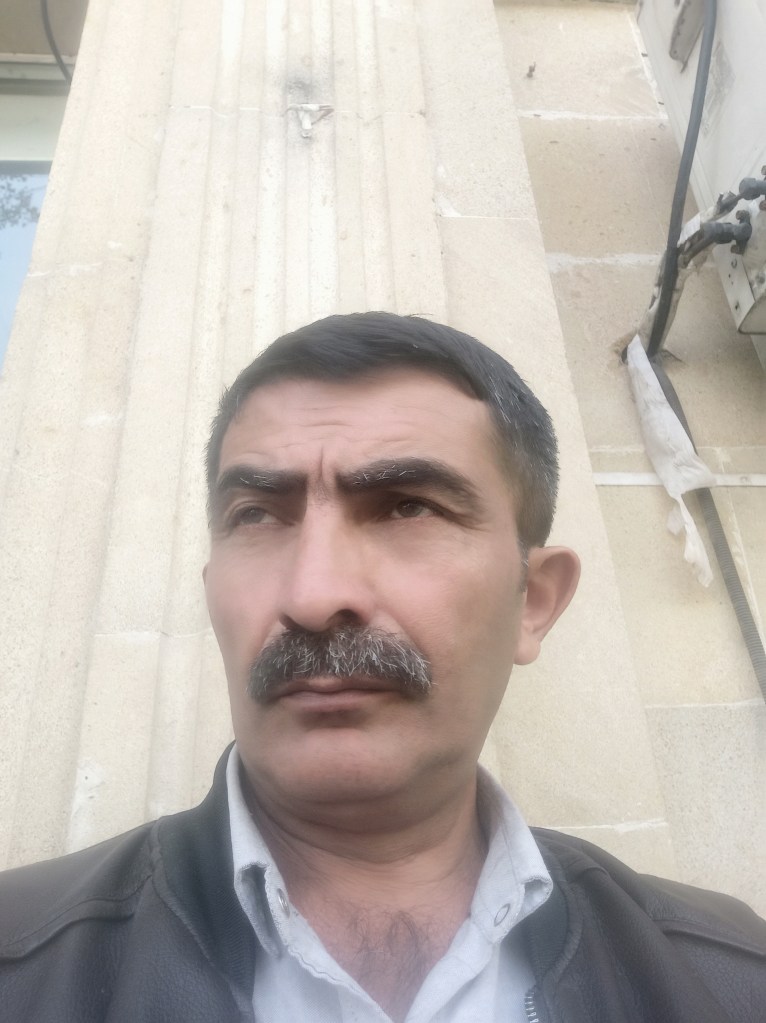
Bahtiyar Hidayet is an Azerbaijani poet, educator, and former political prisoner whose work combines lyrical reflection with sharp social and political observation. Born in 1974 and trained as a history teacher, he has written several poetry collections, and his poems often explore memory, injustice, human resilience, and everyday life in contemporary Azerbaijan. The poem above is titled “Under The Silk Blanket.”


