Collects in a Time of Virus – II

Brooding God,
Who hovers over the waters,
Remain with us, for we are stranded on tiny islands of fear.
Draw a circle around our solitude,
hold us back from bringing danger to ourselves and others.
And where touch can no longer reach,
let love spin light across dark waters,
a thread of sweetness for small songs we might sing.

God who speaks the word ‘Beloved’
Keep watch on those who give voice to care,
Who speak trenchant truths,
explaining, instructing and chiding without blame.
Let us hear the warmth and strength in voices that stir response
and nourish hope in thoughtful action.
Give us ears to listen without fear.

God of the frail in body and mind,
be a companion in loneliness,
a consolation in absence,
a balm in mystified sorrow.
When doors, through fierce kindness must stay shut
Let love arise in memory of gesture and embrace.


Collects by Julie Perrin, published with permission.

Photographs by Ian Ferguson, published with permission.

℘℘℘℘

JULIE PERRIN IS A MELBOURNE WRITER, ORAL STORYTELLER, AND ASSOCIATE TEACHER AT PILGRIM THEOLOGICAL COLLEGE, UNIVERSITY OF DIVINITY. SHE KEEPS A WEBSITE, AND HER MOST RECENT BOOK IS TENDER. SHE LIVES AND WORKS ON WURUNDJERI LAND.
IAN FERGUSON IS MINISTER OF THE WORD AT BRUNSWICK UNITING CHURCH. HE TOO LIVES AND WORKS ON WURUNDJERI LAND.

Collects in a Time of Virus – I

The Melbourne-based writer Julie Perrin, a regular contributor to the ATA site, has been writing a series of collects during and for this time. Julie has given us permission to repost them here, and we will do so throughout Holy Week.

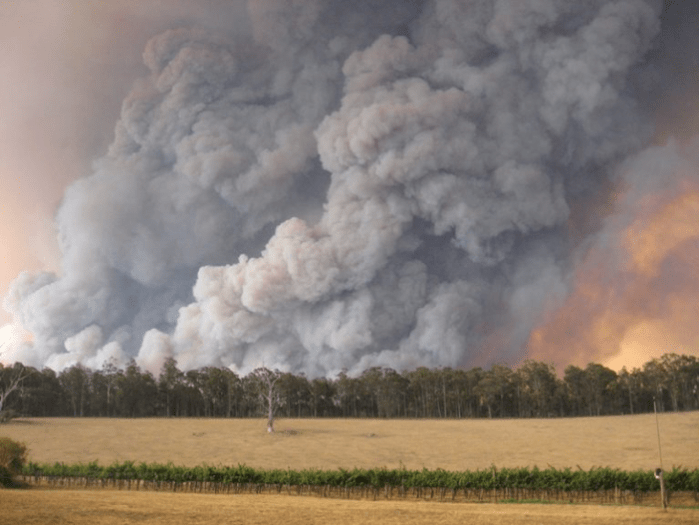
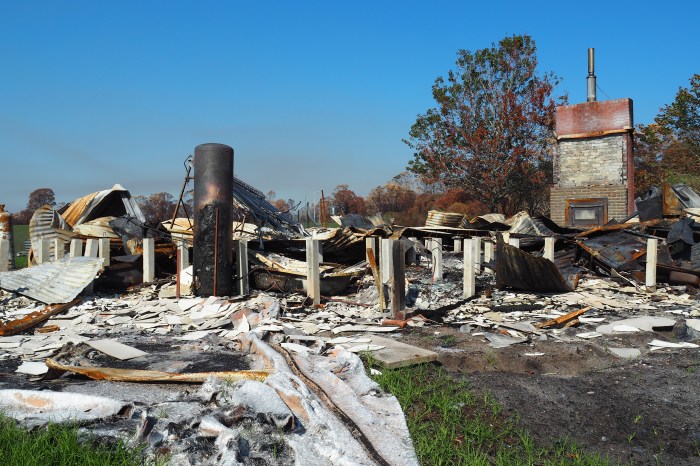
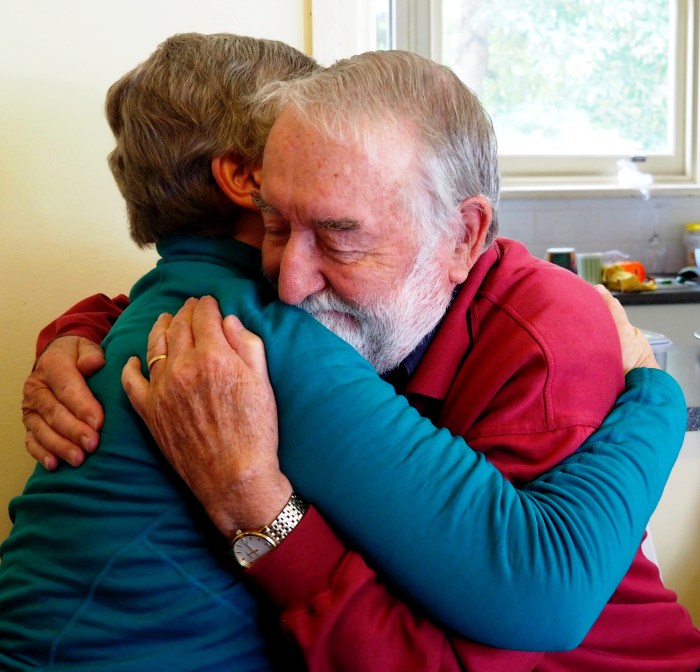
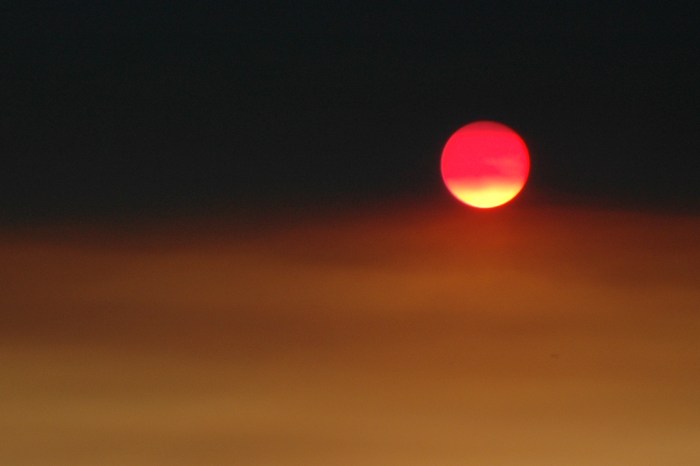
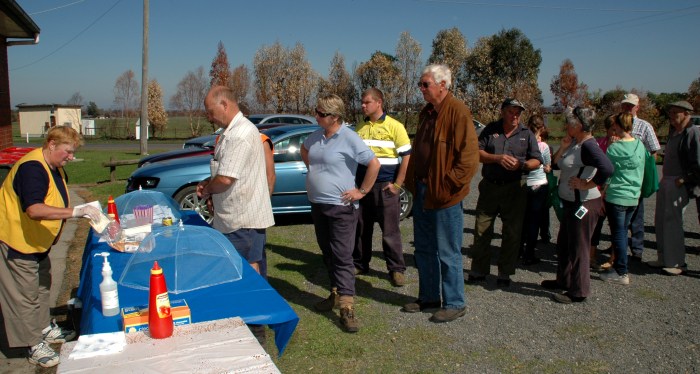
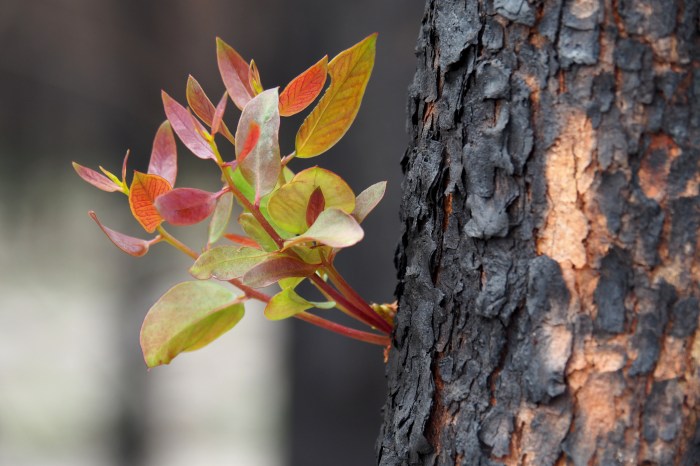
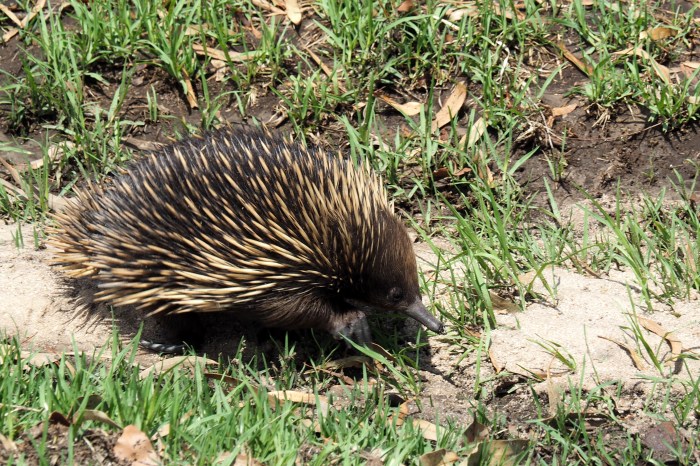
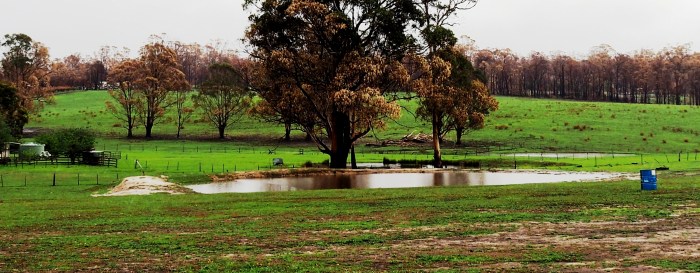
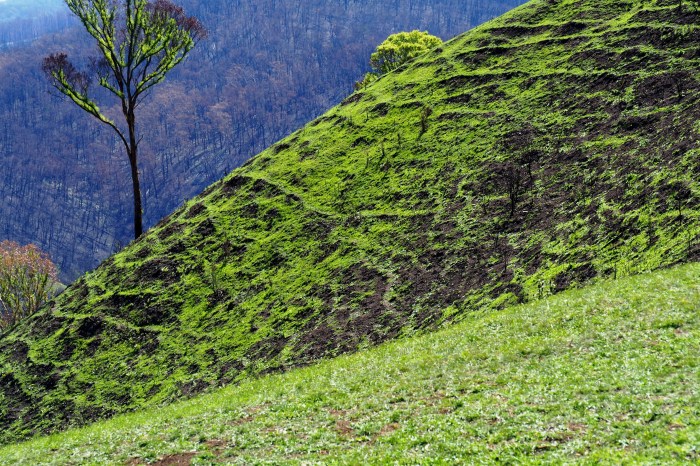
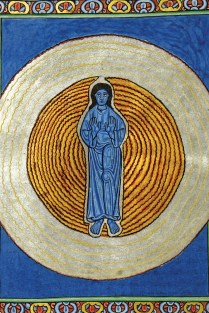
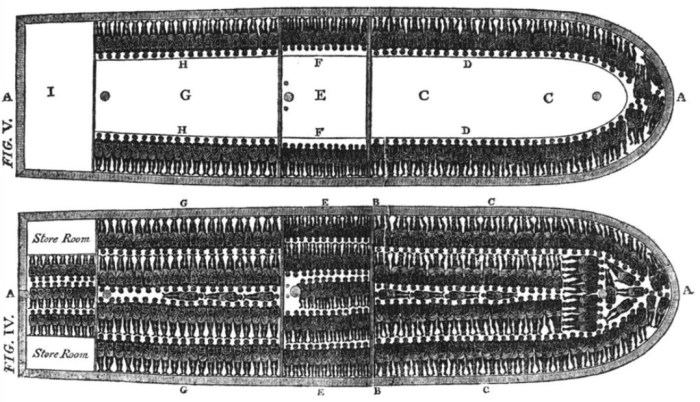
These will be accompanied by some wonderful photography by Ian Ferguson, photos taken over the past 6 weeks while he has been in East Gippsland. Images are used with permission.

Those interested in audio/video recordings of the collects, as well as other COVID-19 worship resources, can access these via the Uniting Church Synod of Victoria and Tasmania website.

ℑℑℑℑ

God of those who are numbed,
stunned by loss,
enfold us in a gentle darkness,
a hidden sleep, a long stillness.
Re-member us to ourselves
awaken the courage we’d forgotten we had.

God who knows chaos
Who creates in darkness,
makes life from mud.
Give us back to ourselves
dissolved and helpless
may we feel ourselves forming
know our own shape.

Fierce Lover of life,
give strength to our arms and our resolve.
Critical is this time for cleaning, swabbing, scrubbing
and washing our hands again.
And again, and again.
Let us join ourselves to the task
with readiness, steadiness, clarity.
Because we too love life,
our own and our neighbour’s.

℘℘℘℘

JULIE PERRIN IS A MELBOURNE WRITER, ORAL STORYTELLER, AND ASSOCIATE TEACHER AT PILGRIM THEOLOGICAL COLLEGE, UNIVERSITY OF DIVINITY. SHE KEEPS A WEBSITE, AND HER MOST RECENT BOOK IS TENDER. SHE LIVES AND WORKS ON WURUNDJERI LAND.
IAN FERGUSON IS MINISTER OF THE WORD AT BRUNSWICK UNITING CHURCH. HE TOO LIVES AND WORKS ON WURUNDJERI LAND.


Now is the time to re-create the world

INST047110.jpg

A response to ‘Is now the time to make art?’:

Now is the time to re-create the world
If the word was the beginning
then the idea preceded
– it didn’t get a mention –
yet amongst the symbols
light between dark
in the beginning was thought
that the light birthed before the word
the beginning, we began again

we think, therefore, we be
we practise the light between the dark
now, we practise the light
the dark, we’ll re-shape
with sentient hands, voices, bodies
minds, wombs,
re-create the world
(in the beginning was the word)
in the beginning, the eternal light
(the word was with God)
the unravelling, re-woven
(and the word was God)
before we speak, write, breathe, move
we remake the world
now is the time to re-create the world.

Image: Yhonnie Scarce and Edition Office, In Absence (detail), 2019. The National Gallery of Victoria, Melbourne. Image by Ben Hosking.

℘℘℘℘

Barbara Curzon-Siggers is a published freelance non-fiction writer, poet, and pending novelist. She also works extensively with individual agencies and organisations transitioning to zero carbon emission and environmentally sustainable business practices, and sits on a number of local government and state government policy reference groups looking at the same. Currently, she is redesigning her life – like many other persons on the planet – in the light of this new SARS-CoV-2 reality. She lives and works on the land of the Dja Dja Wurrung.

Is now the time to make art?

What kind of time is this? And what might such a time mean for artists and their work?

Beyond the very real financial hit that many artists are currently taking, a great many of us, artists included, are welcoming this abnormal moment to ask other questions – existential questions, and questions about our regular habits and commitments, for example. It is suggested that to try to carry on with business as usual, however tempting and well-intentioned that might be, would be to forego a rare opportunity to reimagine and re-embody other modes of our living. Others are turning to all kinds of creative endeavours. Others still – including artists – are asking whether now is really the time to make art at all?

Of course, we’ve been here before. This is hardly the first time in our history that such questions have been asked.

In the aftermath of WWII, where the dominating backdrop was clearly otherwise than it is today, the philosopher Theodor Adorno, in his Negative Dialectics, raised the question of whether the traumas of Auschwitz mean that ‘we cannot say anymore than the immutable is truth, and that the mobile, transitory is appearance’. It is not, he insisted, a case of an impossibility of distinguishing between eternal truth and temporary appearances (Plato and Hegel had already showed us how that could be done); it’s just that one cannot do so post-Auschwitz without making a sheer mockery of the fact:

After Auschwitz, our feelings resist any claim of the positivity of existence as sanctimonious, as wronging the victims: they balk at squeezing any kind of sense, however bleached, out of the victims’ fate. And these feelings do have an objective side after events that make a mockery of the construction of immanence as endowed with a meaning radiated by an affirmatively posited transcendence.

Put more plainly, our emotional responses to horrors of such magnitude ought to outweigh all our attempts to explain them. It was this conviction too that led Adorno to state famously (in his essay ‘Art, Culture and Society’) that ‘to write poetry after Auschwitz is barbaric’, and that ‘the task of art today is to bring chaos into order’. The line between explanation and intelligibility has been severed. In the wake of such, we are left with the possibility of Adorno’s ‘negative theodicy’, a kind of theodicy in which the old intellectual and philosophical distance is impossible. If we are to make any headway at all in recognizing how the Nazi death camps succeeded in the destruction of biographical life, and reorientate our thinking in response, Adorno argues, we must learn how to regard Auschwitz as the culmination of a trajectory embedded in the history of western culture in the wake of the Enlightenment. In other words, there can be no genuine acknowledgement of the Holocaust that does not begin with the realization that ‘we did it’.

Today, our questions may be otherwise. For some of us – for those, for example, trying to discern (or create) lines between unbridled capitalism, ecological disaster, and global pandemics – perhaps they are not so.

In his latest post for The Red Hand Files, musician Nick Cave responds to a series of questions about his own plans for this time during the corona pandemic. His reflection is worth repeating here in full:

Dear Alice, Henry and Saskia,

My response to a crisis has always been to create. This impulse has saved me many times – when things got bad I’d plan a tour, or write a book, or make a record – I’d hide myself in work, and try to stay one step ahead of whatever it was that was pursuing me. So, when it became clear that The Bad Seeds would have to postpone the European tour and that I would have, at the very least, three months of sudden spare time, my mind jumped into overdrive with ideas of how to fill that space. On a video call with my team we threw ideas around – stream a solo performance from my home, write an isolation album, write an online corona diary, write an apocalyptic film script, create a pandemic playlist on Spotify, start an online reading club, answer Red Hand Files questions live online, stream a songwriting tutorial, or a cooking programme, etc. – all with the aim to keep my creative momentum going, and to give my self-isolating fans something to do.

That night, as I contemplated these ideas, I began to think about what I had done in the last three months – working with Warren and the Sydney Symphony Orchestra, planning and mounting a massive and incredibly complex Nick Cave exhibition with the Royal Danish Library, putting together the Stranger Than Kindness book, working on an updated edition of my “Collected Lyrics”, developing the show for the Ghosteen world tour (which, by the way, will be fucking mind-blowing if we ever get to do it!), working on a second B Sides and Rarities record and, of course, reading and writing The Red Hand Files. As I sat there in bed and reflected, another thought presented itself, clear and wondrous and humane –

Why is this the time to get creative?

Together we have stepped into history and are now living inside an event unprecedented in our lifetime. Every day the news provides us with dizzying information that a few weeks before would have been unthinkable. What deranged and divided us a month ago seems, at best, an embarrassment from an idle and privileged time. We have become eyewitnesses to a catastrophe that we are seeing unfold from the inside out. We are forced to isolate – to be vigilant, to be quiet, to watch and contemplate the possible implosion of our civilisation in real time. When we eventually step clear of this moment we will have discovered things about our leaders, our societal systems, our friends, our enemies and most of all, ourselves. We will know something of our resilience, our capacity for forgiveness, and our mutual vulnerability. Perhaps, it is a time to pay attention, to be mindful, to be observant.

As an artist, it feels inapt to miss this extraordinary moment. Suddenly, the acts of writing a novel, or a screenplay or a series of songs seem like indulgences from a bygone era. For me, this is not a time to be buried in the business of creating. It is a time to take a backseat and use this opportunity to reflect on exactly what our function is – what we, as artists, are for.

Saskia, there are other forms of engagement, open to us all. An email to a distant friend, a phone call to a parent or sibling, a kind word to a neighbour, a prayer for those working on the front lines. These simple gestures can bind the world together – throwing threads of love here and there, ultimately connecting us all – so that when we do emerge from this moment we are unified by compassion, humility and a greater dignity. Perhaps, we will also see the world through different eyes, with an awakened reverence for the wondrous thing that it is. This could, indeed, be the truest creative work of all.

Love, Nick x

Like Cave, Adorno too challenges us to ‘take a backseat and use this opportunity to reflect on exactly what our function is – what we, as artists, are for’ – and to lean into ‘other forms of engagement’ that such uncertain and time-altering times render (almost) unavoidable. It is certainly a time to consider our responsibility to and involvement in all kinds of violence, for example.

But is this the only or final word on the matter? Returning to Adorno and his book Minima Moralia: Reflections on Damaged Life, he suggests that:

The only philosophy which can be responsibly practiced in face of despair is the attempt to contemplate all things as they would present themselves from the standpoint of redemption. Knowledge has no light but that shed on the world by redemption: all else is reconstruction, mere technique. Perspectives must be fashioned that displace and estrange the world, reveal it to be, with its rifts and crevices, as indigent and distorted as it will appear one day in the messianic light. To gain such perspectives without velleity [fancy] or violence, entirely from felt contact with its objects ­– this alone is the task of thought.

Is not what might be true for ‘philosophy’ and ‘thought’ not also true for art? Redemption, the ‘messianic light’, exposes the incongruity between the world as it appears now and the world as it might be. That exposure – birthed and sustained by profound and counterintuitive hope, hope born not of trust in markets or in a change of conditions but which is the wholly unanticipated gift of the God of life – serves as both a judgement upon all that threatens and overcomes life, and as a promise that there is a love that is stronger than death.

That exposure also brings new possibilities for artists – in their freedom – to find their banjos, their pens, their brushes, their shoes, their voices, their humanity, etc. etc.

Human poiesis (and theology too, for that matter) can be – and in this world ought to be, as Jonathan Sacks put it in To Heal a Fractured World: The Ethics of Responsibility – a form of protest ‘against the world that is, in the name of the world that is not yet but ought to be’. It can like placing oneself right in the midst of a broken world – something like the way that the cellist Vedran Smailović placed himself in Sarajevo’s partially-bombed National Library in 1992 – and refusing to accept that the way things appear is the way that things must or will be.

℘℘℘℘

JASON GORONCY IS A THEOLOGIAN, ARTIST, AND FOLK FESTIVAL TRAGIC WHO LIVES AND PLAYS ON WURUNDJERI LAND.

I woke up and it was Tuesday

dust in sunlight.jpg

Rushing, hurtling towards a gasp at success, power, wealth, entertainment.
Anything to keep from thinking, feeling what there is, deep down in containment.
You know it, I can feel it, but we cover.
Keep it hidden so that no one can discover.
Work harder, play more, buy, spend, indulge. Just believe in yourself.
That is the mantra of this world.

But does it … work?

In an instant, maybe three weeks or so, cracks begin to grow.
They multiply while we laugh and play and work all day.
Tremors below the sky, whispers of the slowly spreading contagion.
Unseen, so is it really there? Really there? The Prime Minister now has something to say.

And then it all … stops

Quiet. Stuck at home. Me, myself and I staring at the phone.
The stockpile is laughing, a reminder of our materialistic conquests.
There’s a knock at my door. “Are you OK?”, they say. “Please stand 2 metres away!”
It’s invisible that monster at the microscopic level.

Panic whelms, our conjured up worlds are … fragile

Being swept away by something so little that causes decay.
Who would have ever thought that all, from the demographic low to the Prince of Wales, were so evenly susceptible to this market crushing foe?
We have always declared that our fate is in our own hands.
“You are what determines the outcome!” roar the self-help books from the aisle stands.

Reality check. Look what a bat has … done

We are all like dust and so is our stuff. Man, his days are like grass or maybe that flower in the field;
The wind blows, and it is gone, the ground has forgotten.
Oh how we wish we would have had that vaccine shield.

Please wake up, we are but … dust.

℘℘℘℘

Megan Fisher serves as a manager in the McKinnon Reformed Presbyterian Church, homeschools four of their five children, and teaches English and citizenship classes for women in the Melbourne Afghan community. Sometimes she is successful at finding just enough silence to create the art that is rumbling around in her head. She lives and works on Wurundjeri Land.

Silence

Anselm Kiefer, Die Ungeborenen (The Unborn), 1978. Acrylic, shellac emulsion and lead on paper collage laid on canvas, 170 x 189 cm. Private collection, Switzerland.jpg

I have known the silence of the stars and of the sea,
And the silence of the city when it pauses,
And the silence of a man and a maid,
And the silence for which music alone finds the word,
And the silence of the woods before the winds of spring begin,
And the silence of the sick
When their eyes roam about the room.
And I ask: For the depths
Of what use is language?
A beast of the field moans a few times
When death takes its young.
And we are voiceless in the presence of realities—
We cannot speak.

A curious boy asks an old soldier
Sitting in front of the grocery store,
“How did you lose your leg?”
And the old soldier is struck with silence,
Or his mind flies away
Because he cannot concentrate it on Gettysburg.
It comes back jocosely
And he says, “A bear bit it off.”
And the boy wonders, while the old soldier
Dumbly, feebly lives over
The flashes of guns, the thunder of cannon,
The shrieks of the slain,
And himself lying on the ground,
And the hospital surgeons, the knives,
And the long days in bed.
But if he could describe it all
He would be an artist.
But if he were an artist there would be deeper wounds
Which he could not describe.

There is the silence of a great hatred,
And the silence of a great love,
And the silence of a deep peace of mind,
And the silence of an embittered friendship,
There is the silence of a spiritual crisis,
Through which your soul, exquisitely tortured,
Comes with visions not to be uttered
Into a realm of higher life.
And the silence of the gods who understand each other without speech,
There is the silence of defeat.
There is the silence of those unjustly punished;
And the silence of the dying whose hand
Suddenly grips yours.
There is the silence between father and son,
When the father cannot explain his life,
Even though he be misunderstood for it.

There is the silence that comes between husband and wife.
There is the silence of those who have failed;
And the vast silence that covers
Broken nations and vanquished leaders.
There is the silence of Lincoln,
Thinking of the poverty of his youth.
And the silence of Napoleon
After Waterloo.
And the silence of Jeanne d’Arc
Saying amid the flames, “Blesséd Jesus”—
Revealing in two words all sorrow, all hope.
And there is the silence of age,
Too full of wisdom for the tongue to utter it
In words intelligible to those who have not lived
The great range of life.

And there is the silence of the dead.
If we who are in life cannot speak
Of profound experiences,
Why do you marvel that the dead
Do not tell you of death?
Their silence shall be interpreted
As we approach them.

– Edgar Lee Masters, ‘Silence’, Poetry (February, 1915), 209–11.

Image: Anselm Kiefer, Die Ungeborenen (The Unborn), 1978. Acrylic, shellac emulsion and lead on paper collage laid on canvas, 170 x 189 cm. Private collection, Switzerland.

[Reposted from jasongoroncy.com]


fragments

Street Art, February 2019 0711.JPG

pull down the blinds
bolt the doors shut
plaster over the
welcome

this is the year of desolation
no communion here
we are not celebrating
our eyes are stinging
deep grief
on this desecrated land

there is a stand
at the doorway
bowl of Nairm’s salty water
large terracotta pot
not with living soil
but full of the ash of the fires
of the last two centuries
in this country

make a paste
smear the lintels
frames
walls and windows
so that the angel of death
might pass over
that we might be freed from the
tyranny of false truths
lazy assumptions
greedy self interest

we can barely comprehend
the extinction of species
those not yet discovered
plants animals and marine life
the pollution of waterways
contamination of soil
all in the
name
of
progress

this year of sackcloth
and ashes to unmask and
master consumption
let us gather
together the fragments of truth
as they catch in
eyelashes and throats
and bury them
that this land
and people
might be healed

3 January 2020, Keren McClelland

Photo by Jason Goroncy

℘℘℘℘

Keren McClelland is a Baptist minister currently completing a Master of Urban Horticulture. She works with gardeners in private and community gardens across Melbourne in her business Wagtail Gardens. Keren lives of the land of the Wurundjeri people.

Towards the Quest for an Australian Jesus

Queenie McKenzie, People talking to Jesus in the Bough Shed, 1995.png
Queenie McKenzie, People talking to Jesus in the Bough Shed, 1995. Christof Collection of the Diocese of Broome. This painting was the theme image for Catholic celebrations of NAIDOC Week 2019.

HTS Teologiese Studies / Theological Studies, a South African-based open-access journal, has just published a little piece that I wrote:

‘“A Pretty Decent Sort of Bloke”: Towards the Quest for an Australian Jesus’. HTS Teologiese Studies/Theological Studies 75, no. 4 (2019), e1–e10. (HTMLEPUBPDF)

Abstract

From many Aboriginal elders, such as Tjangika Napaltjani, Bob Williams and Djiniyini Gondarra, to painters, such as Arthur Boyd, Pro Hart and John Forrester-Clack, from historians, such as Manning Clark, and poets, such as Maureen Watson, Francis Webb and Henry Lawson, to celebrated novelists, such as Joseph Furphy, Patrick White and Tim Winton, the figure of Jesus has occupied an endearing and idiosyncratic place in the Australian imagination. It is evidence enough that ‘Australians have been anticlerical and antichurch, but rarely antiJesus’ (Stuart Piggin). But which Jesus? In what follows, I seek to listen to what some Australians make of Jesus, and to consider some theological implications of their contributions for the enduring quest for an Australian Jesus.

The article can be accessed here.

℘℘℘℘

JASON GORONCY IS A THEOLOGIAN, ARTIST, AND folk festival tragic WHO LIVES AND PLAYS ON WURUNDJERI LAND.


Sacred Solitude

I had thought the tangible empty
the tingling hint the yearning
for palm to palm – an absence
but I begin feel a whisper
Your whisper across my palm
where no other hand will fit,
no other can remain,
in intimate embrace
others feel Your grasp in
the clasping hands with an other, but I –
am I destined for a different
kind of intimate?

not sex not tawdry not ‘in love
with God My Saviour’
this taking hand in hand
this different
I have known much longer
than admitted
without name without voice
for what was clouded before
the forced withdrawal this fogged
fatigue demanded cleared
the way and now as once before
in darkness here we are
here with me You are here
the only one I never
turn away and is that not
the intimate, are You not
the one to hold my hand, the one
who will bear witness, and it has taken
me till now to truly shed
the story I’ve been told
that in that place can only
stand a human?

I hear another story
Hildegard, Julian, Thérèse
tell me another story of being one
whose hand is held by
Holy hand – and by no other
tell me now my story so that I
can feel the whisper
on my palm as Presence.

℘℘℘℘

Sarah Agnew is a storyteller, poet, and Uniting Church minister currently in placement with Canberra Central Parish. Her poetry and liturgy appear in Wild Goose Publications as stand-alone e-liturgies, and in edited anthologies as weekly prayer-poems at Pray the Story. Her most recent published poetry collection is Hold Them Close (Resource Publications, 2018). She lives and works on Ngunnawal country.

Book Launch: On Arrivals of Breath

Readers of ATA are warmly invited to the launch of Anne Elvey’s new collection of poetry and prayer-like poems, On Arrivals of Breath. This will take place in Melbourne on Tuesday 15 October 2019, and in Sydney on Tuesday 22 October 2019. Details below.

Launch flyer - Melbourne - 4_Page_1.jpgLaunch flyer - Sydney_Page_1.jpg

Launch flyer - Sydney_Page_2.jpg