Articles

Keeping Vigil

Embed from Getty Images

‘Are you alright?’ The text message comes in late at night at the very end of the decade. I don’t understand my friend’s concern until I recall telling her our campervan road trip plan. For the Christmas break, we were heading to Wangaratta, Corryong, Canberra, and back home via the coast. Now, apart from Wangaratta, every destination in our plan is either on fire or surrounded by it. We turn tail and head back to Melbourne.

Hours after we arrive home a call comes in. My 94-year-old mother has had a major stroke. There’s a long evening in Emergency at Box Hill Hospital and after midnight we sleep in a nearby street in the campervan.

That night curtained off from the street, I enter the cocooned time of vigil where nothing else matters and everything matters.

The following day the medical staff tell me that my mother will not recover. Her Advanced Care Plan is our guide, for she can longer speak or move the right side of her body. In the instance of brain damage, my mother has documented that the only intervention she would want is pain relief. The staff assume she can hear and speak to her with quiet respect, explaining each small action and intention.

While I stay by my mother, I glean only the edges of the news; already the horror of the fires has been at full stretch. In the quiet room where my mother lies, I think of people trying to sleep in unfamiliar environments, refugees from the fires.

When we were on the road we’d been checking with friends in areas under threat. One loses her house in Mallacoota; another finds thousands of dead birds on the beach at Lake Tyers. An extended family member is in the Rural Fire Service in New South Wales. We don’t try to contact him except to cancel our plans to visit.

I spend long hours sitting with my mother. While she sleeps, I try to rest. Periodically I check the numerous messages on my phone. When I gaze out of the window, there is smoke across the horizon. 

I think of the people who will be in burns units, the agony of the fires written into their flesh. I imagine the ones who will be speechless having witnessed trauma they have no words for. Very few will have the luxury of a peaceful space in which to come to terms with loss.

Mum’s room is filled with flowers picked from home gardens and handwritten cards delivered by people who come for brief visits and take their time alone with her. When my brother calls from overseas, he tells me he’s going to sing her a song. I place the phone next to her ear and leave the room so she can listen alone. 

The people in the fires will not have the privilege of saying farewell. They’ve had little warning to leave behind a life, a livelihood, beloved animals, and landscapes. I think of the caregivers in forests and animal refuges. Creatures are gone now in unthinkable numbers.

My friend from Mallacoota tells of a bloke who lives out of town and runs a refuge for injured animals. He had to leave his land, not knowing what might happen to the wallabies and wombats, the eastern grey kangaroo and many birds he feeds out of money eked from his pension. When he flees, he sets up water and feed, and against the prevailing wisdom, leaves the door and windows of his caravan open.

Returning, he finds his caravan rimmed by a patch of unburnt forest. The sky is yellow tinged with amber. The bush is silent. Waiting at the caravan door is a small band of creatures, inside is the eastern grey kangaroo. They have made their way back. Just before the fires, he released three wombats. When reports come back to him of a couple of wombats in the vicinity of their release, he beams with contentment.

Last Spring, in northern New South Wales, rainforests were on fire. Mount Nardi in World Heritage-listed Nightcap National Park burns. Leah White reports on the ABC Science Show that ‘Terania Creek rainforest itself burned for the first time in 1,120 years. Hundreds of brush box and other rainforest trees, many over 1,000 years old, have fallen in flames, their bases eaten out by fire’.

I text my friends who grew up in the northern rivers area. They are bereft.

Eco-philosopher Thom van Dooren teaches at Sydney University and lives in the Blue Mountains. In 2019, when I first speak to him, he describes the task of bearing witness to species extinctions. I talk to him just weeks before these unprecedented ravages of fire erase forests and habitats.

Thom quotes his mentor, the late Deborah Bird Rose. In this age of the Anthropocene, she urges us not to look away but to tell the stories of the creatures who are disappearing.

Rose says you can only miss what you love. She describes the emptiness and possible cynicism of a world denuded of creatures: ‘The emptier Earth becomes, the emptier are those who remain alive. That emptiness may produce a particular gaze, a “mere life” gaze that refuses to live fully because it refuses to face all this death’. With powerful understanding of the interconnectedness of the human and more-than-human world, she says, ‘Without them there is no us’.

In a piece titled ‘Instructions for Life’, the late poet Mary Oliver describes bearing witness in seven words: ‘Pay Attention. / Be Astonished. / Tell about it’.

From a bedside surrounded by kindness, I keep watch by my mother. The medical, nursing and palliative care staff are acutely observant. They do not turn their backs on us.

℘℘℘
JULIE PERRIN IS A MELBOURNE WRITER, ORAL STORYTELLER, AND ASSOCIATE TEACHER AT PILGRIM THEOLOGICAL COLLEGE, UNIVERSITY OF DIVINITY. SHE KEEPS A WEBSITE, AND HER MOST RECENT BOOK IS TENDER. SHE LIVES AND WORKS ON WURUNDJERI LAND.

Why Art Matters In Times Of Crisis

Out of Good Friday, Easter

Threat of fire looming,
adrenalin flowing,
fear rising,
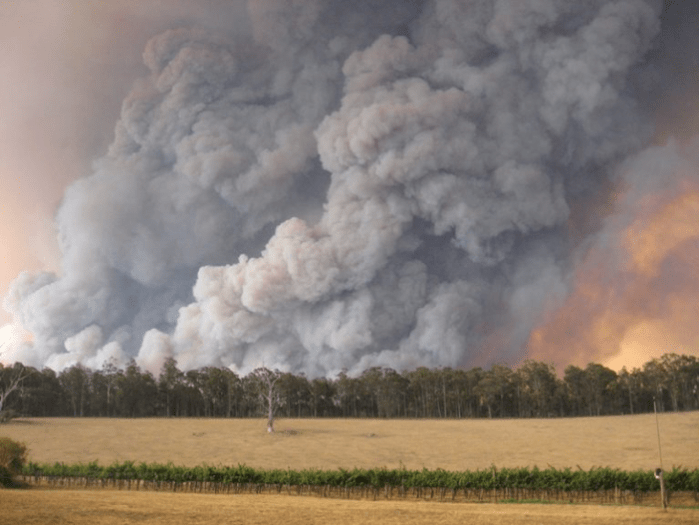
towering clouds of smoke enveloping,
fight or flight decisions.

Picture1

Then, late one night,
roaring in the darkness,
fire hit, walls of flame descending,
people fearful for their very lives,
red tongues devouring flora, fauna, property.

Picture2

Locals, soon to be heroes,
fighting rearguard actions
in extreme conditions.

03 P2281852 'Thank You', W Tree, Feb 28, '20.JPG

Then, dwelling in the aftermath,
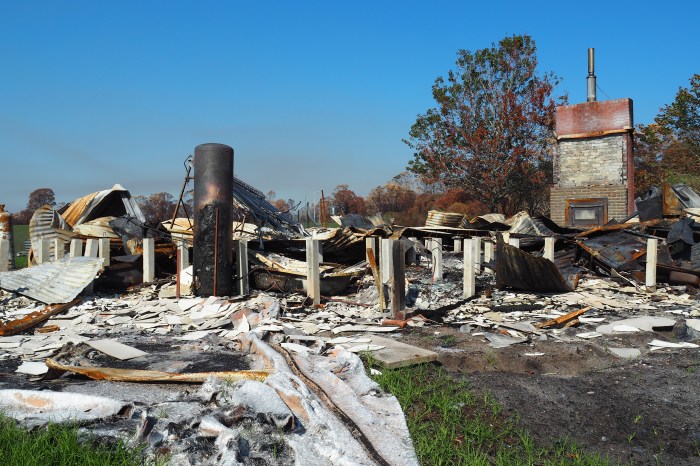
immersed in devastation, destruction, death,
homes, memories, livelihoods shattered:

04 P1250743 Family Home Destroyed.JPG

smoke choking, colour gone,
blackness,
ashes on the ground,
falling from the skies,
washed up on beaches,
eerie silence enveloping.
Adrenalin, still coursing through,
energising, exhausting bodies.

05 P1150513 Smoky Landscape, Sarsfield, Jan 15, '20.JPG

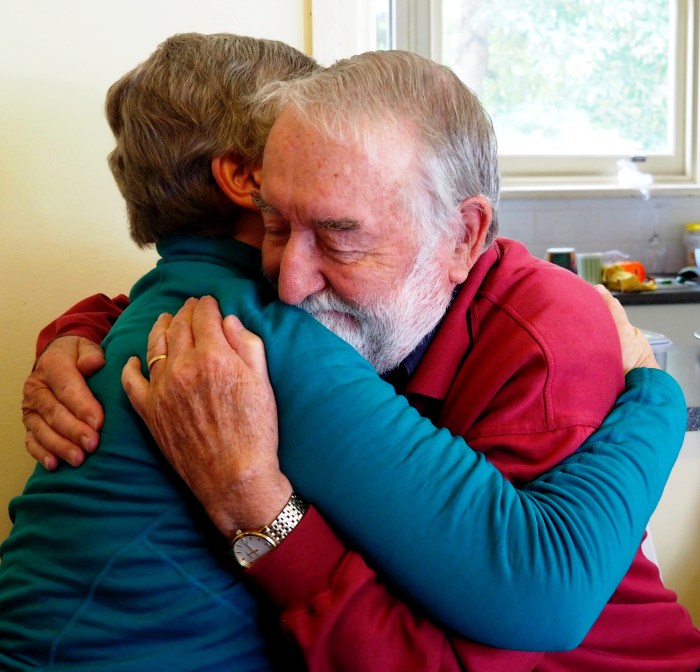
As people meet,
‘It’s so good to see you!’
passionate, heartfelt embracing of one another …

06 PC052003 Embrace.JPG

Wondering,
living with, fighting,
a myriad of feelings.
Questions arise.
Difficult questions.
Demanding questions.
Unanswerable questions.

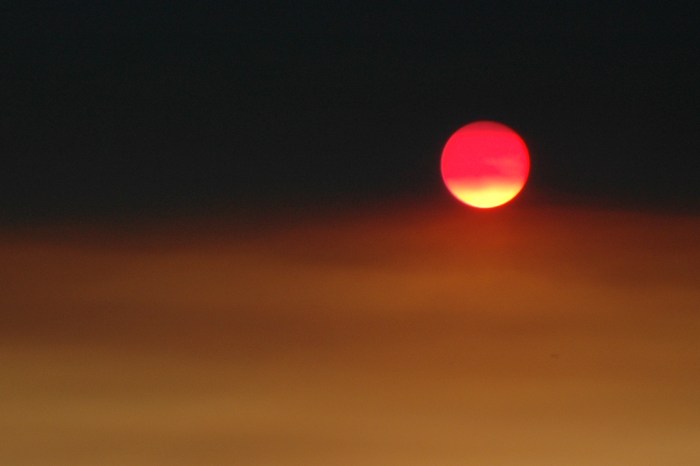
07 Sun through Smoke Apr 21, '09 010.jpg

How do I go on living?
How do we recover?
When there seems no road ahead,
which way to turn?
Where is God in this?

There is a thin line between fear and faith,
between anxiety and trust.

People come,
people speak,
handshakes offered,
not always reciprocated.
Promises made.
Will they be fulfilled?
Will there be listening?
Will ways forward be found?
Recovery, healing?

09 P2261691 Death & Life, Gelantipy, Feb 26, '20.JPG

Activity all round,
sites cleared,
destruction cleared,
roads cleared,
hearts racing,
minds cluttered, chaotic.

10 P2171382 Clearing Princes Highway.JPG

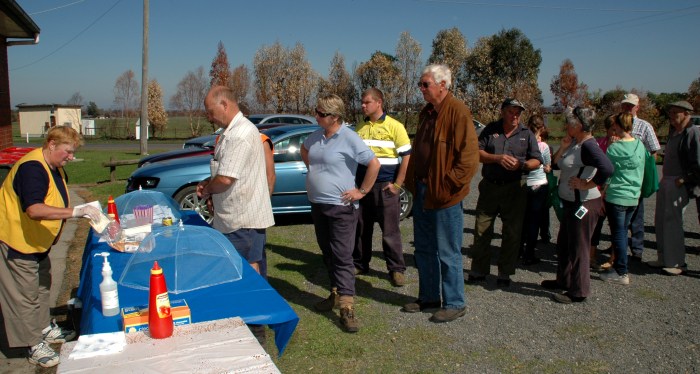
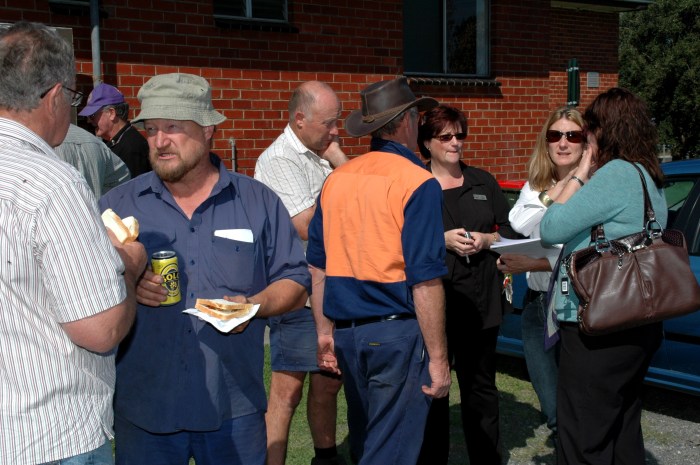
A barbeque is held
people gather.
Sausages cooked, devoured;
and a glass or two
amid much conversation,
the sharing of stories.
Community re-formed, strengthened.
(There will be countless sausage sizzles
in the weeks and months ahead.)

11 BBQ Labertouche Apr 9, '09 017.jpg

At the Relief Centre,
tears are shed,
relief etched on faces
as there is listening
to stories told:
as compassion is shared.
Are such interactions
meetings on holy ground?

12 Meeting on Holy Ground Apr 9, '09 024.jpg

One man,
overwhelmed by his holocaust of fire,
the devastation, and enormity of recovery,
is immobilised.
‘There is too much to do.
I don’t know where to start’.
Another, after listening with intent, suggested
‘Choose one thing,
Focus on it …
When that is done,
Choose one more’.

Some time later,
they met again,
on site.
The One
expressed his gratitude,
‘The small steps approach is working’.
The Another
could see it in the work achieved
and in the countenance before him:
transformed.
Was the God in One
meeting the God in Another?
Was the God in Another
meeting the God in One?

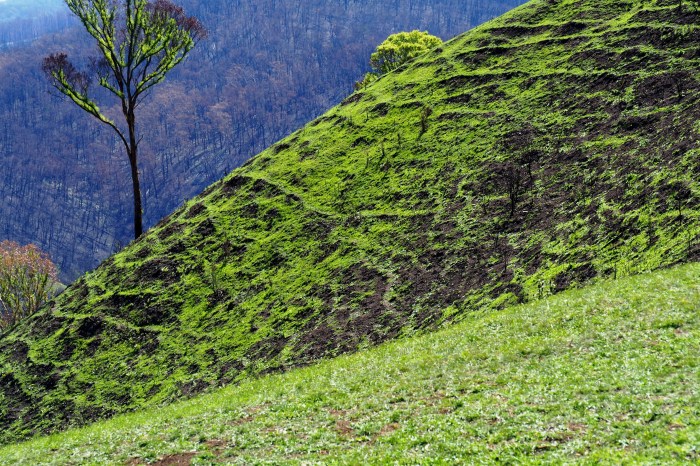
After the fires, rain came,
rain fell, over 100 mils of it,
saturating the soil.
Days later,
the earth gave forth its produce,
as shoots of grass emerged.

13 P1240589 Life returns after rain, Sarsfield, Jan 24, '20 large.JPG

Green grass …
To blackened environments,
the colour, returning,
transfigured the land
as well as many singed hearts and minds.
Spirits lifted.
Was this resurrection?

14 P2171301 Is this resurrection.JPG

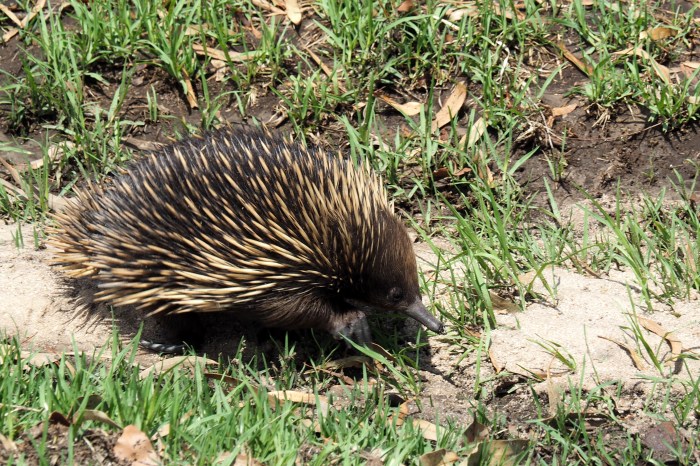
In one rural area,
as two people spoke,
a woman, suddenly distracted,
averted her eyes
as she looked beyond her companion,
crying tears of joy and relief:
‘Eric! He’s alive!
He’s come back!
We thought he was dead’.

There,
scampering across the paddock,
was Eric, the echidna.
‘We thought he was dead’.

15 P1220525 Eric, Windsor Drive Echidna.JPG

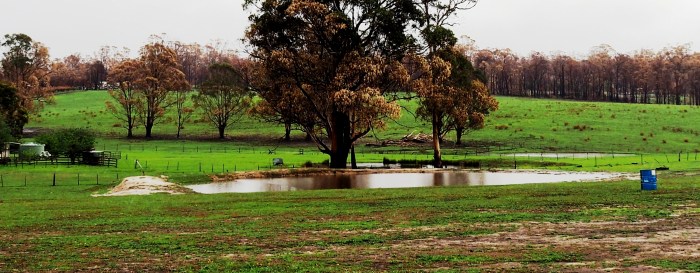
‘My dams have been empty for three years.
Look now!
They’re overflowing!
What a sight for sore eyes!’

16 P1230570 130ml rain fills the dam, Sarsfield, Jan 23, '20.JPG

After days of deathly silence,
birds returning:
kookaburra, magpie,
black cockatoo, rainbow lorikeet,
their songs ringing through the air:
a joy-filled cachophany of sound.
What a chorus!
What colour!
What life!

17 P2130940 Rainbow Lorikeet.JPG

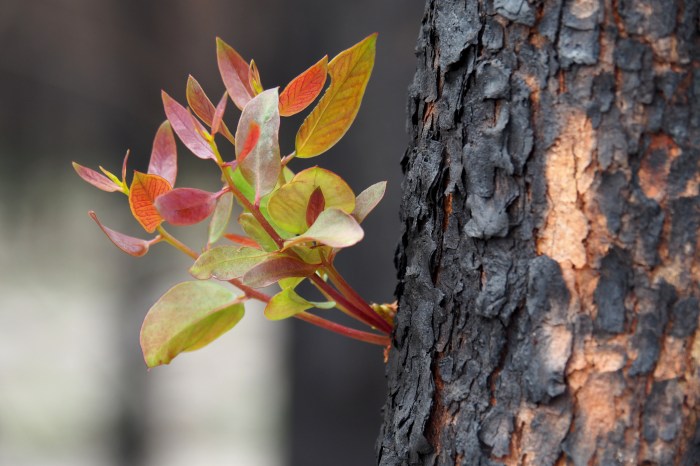
And, out of the desolation,
the beginnings of new life,
greens, reds, blues, browns,
many colours,
the exuberance of nature’s recovery,
– what naturalists call epicormic growth –
breaking through blackness:
emerging from the trunks of trees.
Easter rising from Creation’s Good Friday.

Could it be that, like nature,
out of our struggles and traumas,
new life emerges in we humans?
Could it be that God’s presence
is in literally every thing and every one?
… the Divine Presence in us and in all creation?
… the source of our hope?
Could it be …?

20 P2271805 Regrowth, Buchan Ridge, Feb 27, '20.JPG

℘℘℘℘

Alan Mathews is a retired Uniting Church minister with a passion for photography and discovering life in everyday moments. In these days of social isolation, he enjoys playing with words and images; and with the ‘doors’ they open. He lives, works, and plays on Boonwurrung land.

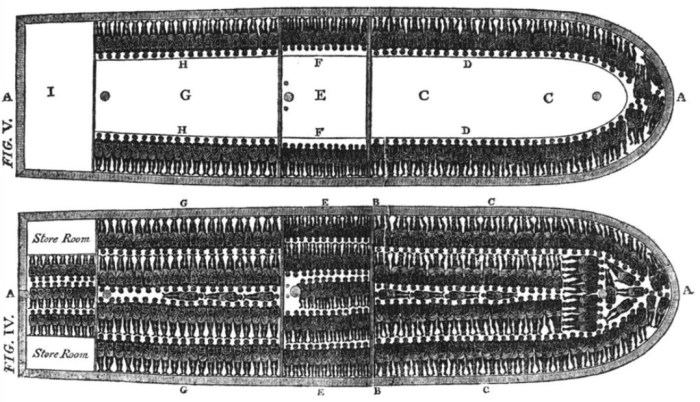
Slave Ship Diagram

BA3C4A57-D27C-49D7-91AA-827BB56540B1_1_201_a.jpeg

11B2230A-1308-417F-B420-A108DC200F74.png

℘℘℘℘

CHRIS GREEN IS PROFESSOR OF THEOLOGY AT SOUTHEASTERN UNIVERSITY IN THE USA. HE IS THE AUTHOR OF SEVERAL BOOKS, INCLUDING SURPRISED BY GOD AND THE END IS MUSIC, BOTH PUBLISHED BY CASCADE PRESS. HE IS ALSO A VISUAL ARTIST.

Awakenings

Screen Shot 2020-04-12 at 4.31.01 pm.png
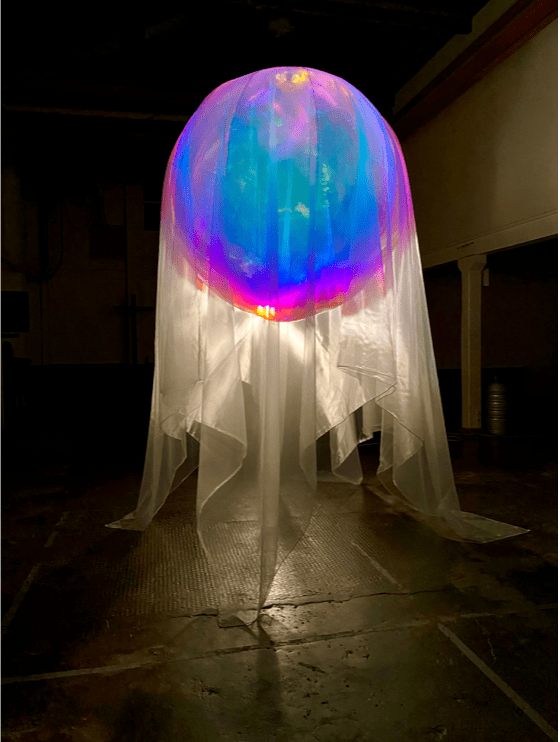
Karen Sewell, Awakenings I, 2020. Installation, Helium balloon, organza mesh, mirror, soft resting elements, 2.5m x 2.5m x 3.5m. Photograph supplied by artist.

Just days before New Zealand went into full level 4 lockdown due to the COVID-19 virus, my husband Graham and I spent an evening in a warehouse in Central Auckland, shooting this work titled Awakenings I. What we experienced that evening was surprising, strange, and otherworldly. As we worked in the dark with a video light, the huge transparent rainbow PVC balloon and organza mesh transformed. It became a levitating partially-concealed object of uncertain substance radiating dancing, shifting fields of colour and light that changed as we moved around and under it. The immediate encounter evoked a sense of wonder, acting for us as a threshold into an experience of the numinous.

Since that evening, I’ve wondered at the timing of this work; of how God might want to be at work in me, and in others during lockdown; of the possibilities waiting for us to be awakened to in these unusual circumstances.

‘Numinous’ means something mysterious, awe-inspiring, or supernatural; unknown or unknowable. It speaks to everything within the realm of our experience which cannot be quantified, explained, or contained. Our intuition, and our sweeping feeling-states. Our connection to the cosmos, and sense of the divine. The German theologian Rudolf Otto, in his book The Idea of the Holy (1923), explains it as a ‘non-rational, non-sensory experience or feeling whose primary and immediate object is outside the self’. 

Screen Shot 2020-04-12 at 4.35.53 pm
Karen Sewell, Awakenings I, 2020. Installation, Helium balloon, organza mesh, mirror, soft resting elements, 2.5m x 2.5m x 3.5m. Photograph supplied by artist.

Artistically, my interest is in the intersection of art and spirituality. This interest has led me to seek and receive inspiration (often through prayer and contemplation) and then to mediate the creation of spaces for audience/participants to engage with and within. The spaces are an effort to open up the potential for a viewer/participant to explore and experience the terrain of the numinous, including an awakening to a sense of wonder, and liminal moments of encounter with the divine. 

Screen Shot 2020-04-12 at 4.37.56 pm
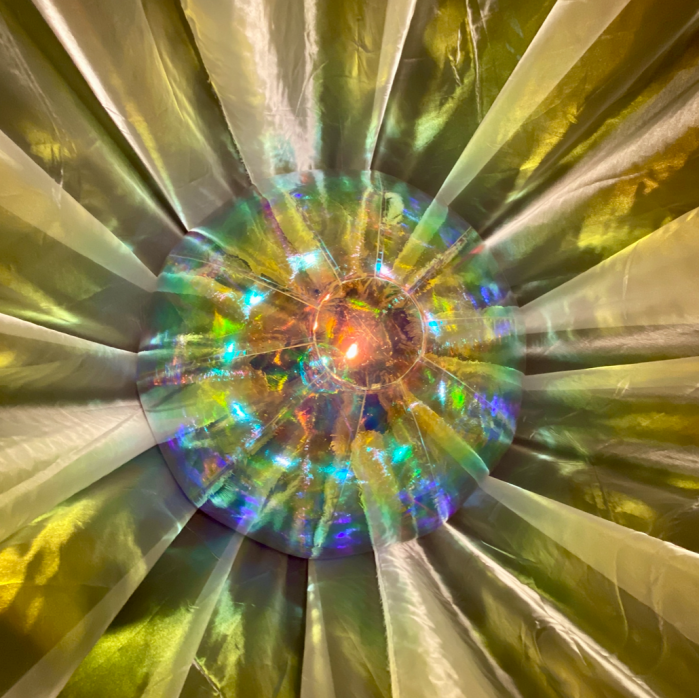
Karen Sewell, Detail of Awakenings I, 2020. Installation, Helium balloon, organza mesh, mirror, soft resting elements, 2.5m x 2.5m x 3.5m. Photograph supplied by artist.

A sense of awe and wonder is closely linked to our deep feelings and emotions, and is excited by something strange and surprising. With my work, I aim to provide a sense of awe and at the same time create a calm atmosphere, a sense of a place to just ‘be’; to observe, to explore, to create, to be present in the moment, to just breathe. It can be about connecting us with nature, with others, with our feelings, and developing a sense of things unknown outside of ourselves. 

As Albert Einstein once put it:

The most beautiful thing we can experience is the mysterious. It is the source of all true art and science. S/He to whom the emotion is a stranger, who can no longer pause to wonder and stand wrapped in awe, is as good as dead – his/her eyes are closed. The insight into the mystery of life, coupled though it be with fear, has also given rise to religion. To know what is impenetrable to us really exists, manifesting itself as the highest wisdom and the most radiant beauty, which our dull faculties can comprehend only in their most primitive forms – this knowledge, this feeling, is at the center of true spirituality.

Screen Shot 2020-04-12 at 4.40.58 pm
Karen Sewell, Detail of Awakenings I, 2020. Installation, Helium balloon, organza mesh, mirror, soft resting elements, 2.5m x 2.5m x 3.5m. Photograph supplied by artist.

℘℘℘℘

Karen Sewell is a visual artist who lives and works in Auckland, New Zealand. She is interested in the intersection of art and spiritual experience. She works across multiple media including sculpture, installation, painting, drawing, and photography, specialising in installation practice. She was the recipient of the Premier Award in the Waitakere Trust Art Award in 2011, and has exhibited work across New Zealand, with a highlight being Wonder Tree, 2019 at Splore Festival in February 2019. In addition to her creative practice, Sewell founded The Bonfire and now facilitates this national artist network. The aims of The Bonfire are to assist and support the thriving of other artists, through online blog posts and face-to-face regular meet-ups involving workshops, retreats, and events.

‘Go to Hell’

It’s Holy Saturday.

Here’s a poem by Pádraig Ó Tuama.

Collects in a Time of Virus – V

God of the harried,
Help us in the tension of these days,
for we are crushed by too many tasks,
nervous of new skills and tools in the too-much of this moment.
May we give heed without collapse,
restore our trust in longer spans of time – beyond the urgency of now.


Collect by Julie Perrin, published with permission.

Photograph by Ian Ferguson, published with permission.

℘℘℘℘

JULIE PERRIN IS A MELBOURNE WRITER, ORAL STORYTELLER, AND ASSOCIATE TEACHER AT PILGRIM THEOLOGICAL COLLEGE, UNIVERSITY OF DIVINITY. SHE KEEPS A WEBSITE, AND HER MOST RECENT BOOK IS TENDER. SHE LIVES AND WORKS ON WURUNDJERI LAND.
IAN FERGUSON IS MINISTER OF THE WORD AT BRUNSWICK UNITING CHURCH. HE TOO LIVES AND WORKS ON WURUNDJERI LAND.

Collects in a Time of Virus – IV

Holy One who fears no fracture,
Lend your clarity to us for we are full of fear.
Already the abyss appears
Cracks in the earth, shifts in the ground we took for granted,
Now there is rupture
We do not trust our capacity to live.
That which is holy, divine, beyond us
frightens and allures us.
Call us to the mystery of the holy.

God of the despondent,
Who sees our tiredness at futile effort
Who knows that fear breeds phantoms,
help us we pray.
We are weary, and everywhere we turn
another impediment rises.
Our shoulders sag, the breath goes out of us.
In this stripped-back bareness, give us breath,
May we delight in our humanity, meet holiness anew.

Collects by Julie Perrin, published with permission.

Photographs by Ian Ferguson, published with permission.

℘℘℘℘

JULIE PERRIN IS A MELBOURNE WRITER, ORAL STORYTELLER, AND ASSOCIATE TEACHER AT PILGRIM THEOLOGICAL COLLEGE, UNIVERSITY OF DIVINITY. SHE KEEPS A WEBSITE, AND HER MOST RECENT BOOK IS TENDER. SHE LIVES AND WORKS ON WURUNDJERI LAND.
IAN FERGUSON IS MINISTER OF THE WORD AT BRUNSWICK UNITING CHURCH. HE TOO LIVES AND WORKS ON WURUNDJERI LAND.

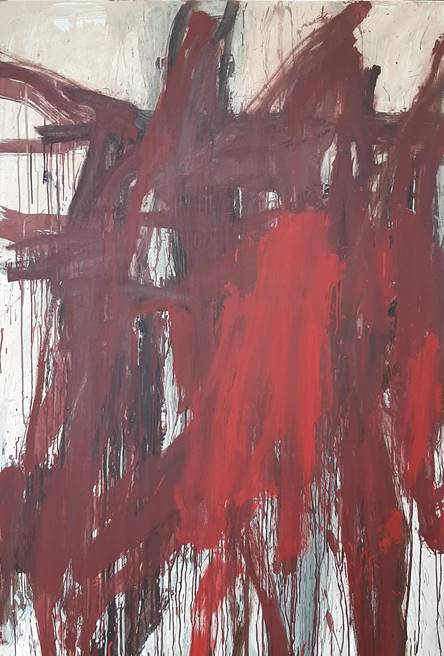
C-V 1


image001.jpg
Douglas Purnell, ‘C-V 1’, 2020. Acrylic on canvas, 180 x 122 cm. Private collection, Sydney.


This painting is human in scale, 180cm x 122cm. Like everyone in the world at the moment, I am living in the time of the Covid19 Pandemic. I have chosen to make a series of paintings that reflect life in the present for me, and, and the experience of ‘lockdown’ where my days begin and end in my studio. The works are beyond my words. I hope they somehow address the mystery that surrounds us.

℘℘℘℘

DOUG PURNELL IS A PASTORAL THEOLOGIAN WHO IN HIS RETIREMENT IS FOCUSING ON A COMMITMENT TO A FULL-TIME STUDIO PRACTICE OF PAINTING THAT EXPLORES THE NATURE OF ABSTRACTION AND MARK MAKING. HE WAS FOR 17 YEARS THE DIRECTOR OF THE BLAKE PRIZE FOR RELIGIOUS ART. HE LIVES, WORKS, AND PLAYS ON THE LAND OF THE BURRAMATTAGAL PEOPLE.

Collects in a Time of Virus – III

God of Shadows,
give shelter to hollow, shaken humans
bewildered by sudden closure.
Sturdy structures shattered, hopeful trade ended,
meaningful work gone.
In the shocking silence where nothing can be said,
let birdsong be heard.


Collect by Julie Perrin, published with permission.

Photograph by Ian Ferguson, published with permission.

℘℘℘℘

JULIE PERRIN IS A MELBOURNE WRITER, ORAL STORYTELLER, AND ASSOCIATE TEACHER AT PILGRIM THEOLOGICAL COLLEGE, UNIVERSITY OF DIVINITY. SHE KEEPS A WEBSITE, AND HER MOST RECENT BOOK IS TENDER. SHE LIVES AND WORKS ON WURUNDJERI LAND.
IAN FERGUSON IS MINISTER OF THE WORD AT BRUNSWICK UNITING CHURCH. HE TOO LIVES AND WORKS ON WURUNDJERI LAND.