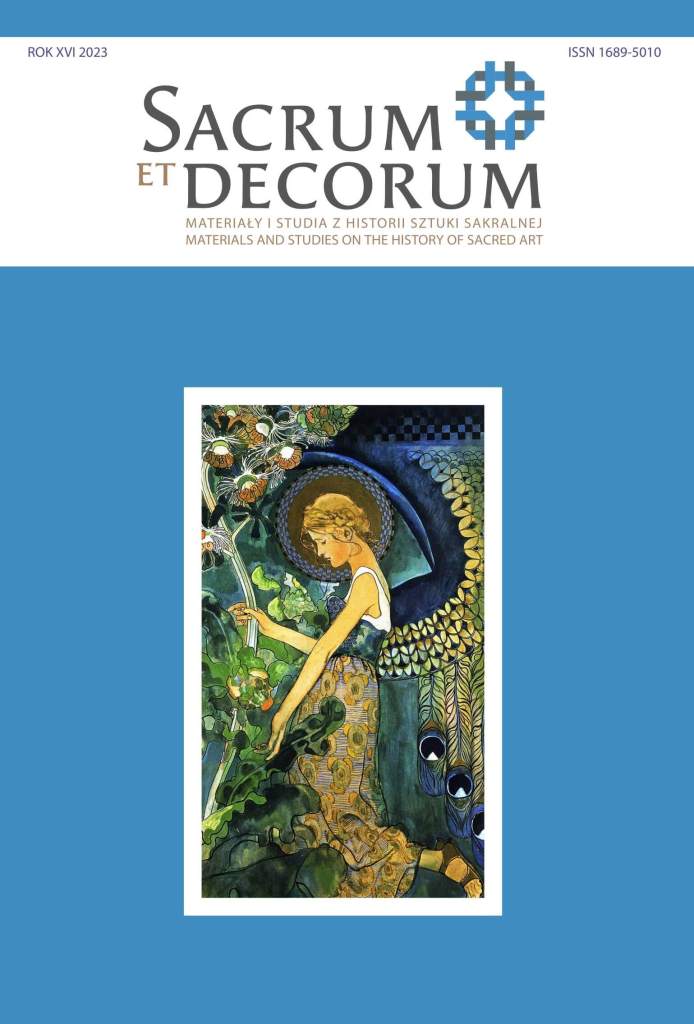
Call for Papers: Sacred Christian Art in Australia and Aotearoa New Zealand

The editors of Sacrum et Decorum, a peer-reviewed international journal dedicated to the history and study of sacred art, invite submissions for a special focus on sacred Christian art in Australia and Aotearoa New Zealand. They welcome contributions that engage with the intersection of Christian (broadly interpreted) visual culture and the distinctive colonial, postcolonial, and multicultural contexts of the region.

Topics of interest include, but are not limited to:

  • Church architecture and interior decoration
  • First Nations and Māori visual traditions’ encounters with European missionary art
  • The reception and adaptation of European sacred art traditions in Australia and New Zealand
  • Religious street art
  • Individual artists, craftspeople, and workshops engaged in sacred art production
  • Stained glass, iconography, sculpture, metalwork, and devotional objects
  • Contemporary sacred art and evolving liturgical aesthetics

Sacrum et Decorum is published in both Polish and English and is indexed in DOAJ, ERIH PLUS, EBSCO, and other major academic databases. It is an open-access publication, and authors retain full copyright under a Creative Commons CC BY 4.0 licence.

The journal welcomes original, previously unpublished scholarly articles making a substantive contribution to the field. In addition to full research articles, shorter contributions – including reviews, source materials, and artists’ reflections on their own practice – are also invited. Submissions in English are particularly encouraged.

Full author guidelines, technical requirements, and submission information are available at the journal’s website.
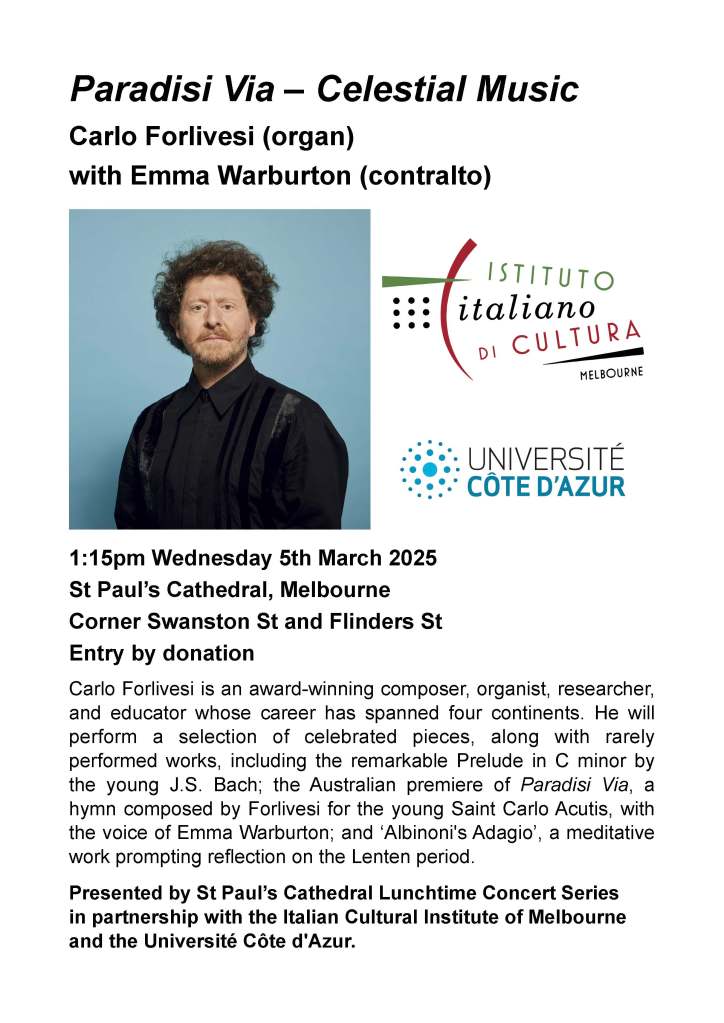
Paradisi Via – Celestial Music: Carlo Forlivesi with Emma Warburton

Issam Kourbaj, Imploded, burnt, turned to ash, 2021

This performance by the Syrian-born and Cambridge-based artist Issam Kourbaj , which took place at the Howard Theatre, Downing College, Cambridge on 15 March 2021, marks the tenth anniversary of the Syrian uprising. Kourbaj describes the project thus:

To mark the tenth anniversary of the Syrian uprising, which was sparked by teenage graffiti in March 2011, this drawing performance will pay homage to those young people who dared to speak their mind, the masses who protested publicly, as well as the many Syrian eyes that were, in the last ten years, burnt and brutally closed forever. I will draw fragments of Arabic words and eye idols on a large surface in layers, repeating and obscuring them beyond all legibility and recognition. It will become a palimpsest of these two elements, the first is inspired by the graffiti that was quickly erased even before it was completed, and the second is based on three Syrian eye idols from the collections of The Fitzwilliam Museum, made of alabaster and dating to around 3200 BC, excavated at Tell Brak, Syria, in a building now called the Eye Temple. I will then burn the final drawing and place the remaining ash in a glass box. Ideally, this will be exhibited in a sacred space to memorialise every victim of the last decade, while also being dedicated to all Syrians lost, displaced and still suffering from this ongoing crisis. Towards the end of the performance, the viewer will hear words written by myself, set to music by renowned composer Richard Causton (Faculty of Music, University of Cambridge) and sung by soprano Jessica Summers.