I thought I saw you at the market after you died, and again rounding a corner on Monte Sano, past Holy Trinity. Convinced, despite your ashes in an alabaster urn, I follow my mother until she turns to look at me with the wrong eyes, wrong smile, three inches too tall – this body was not yours resurrected. Yet, the absentache does not dissipate, but burrows deeper in the bone. Doctors say it’s quite common after amputation to feel pain where there is no longer a limb, experience it as fully as when it was part of your frame you could see and touch – the missing part remains present somehow despite its removal.
I wonder if Christ misses his body, now ascended, misses the smell of his own skin and sweat, timbre of his own voice, touch of his mother’s hand sweeping hair from his face, even well into manhood – does he miss his father’s hand on his shoulder, the grip of his fingers around a hammer, unravelling a scroll? Does he reach to touch his chest where the pain of humanity still throbs, but there is no ribcage, no pumping heart? Or does he try to conjure the scent of spices, taste of roasted lamb filling his stomach, the sensation of sleep? Does his side still flinch with the memory pain of a blade sunk deep, do his fingers long to trace the borders of his wound?
℘℘℘℘
Nadine Ellsworth-Moran is a minister serving in Georgia, USA. She has a passion for writing and the arts. She is fascinated by the obscure and the way grace shows up unannounced. She has been published in over 60 journals and hopes to continue to find ways to put the indescribable into words. She lives with her husband and five unrepentant cats.
The editors of Sacrum et Decorum, a peer-reviewed international journal dedicated to the history and study of sacred art, invite submissions for a special focus on sacredChristian art in Australia and Aotearoa New Zealand. They welcome contributions that engage with the intersection of Christian (broadly interpreted) visual culture and the distinctive colonial, postcolonial, and multicultural contexts of the region.
Topics of interest include, but are not limited to:
Church architecture and interior decoration
First Nations and Māori visual traditions’ encounters with European missionary art
The reception and adaptation of European sacred art traditions in Australia and New Zealand
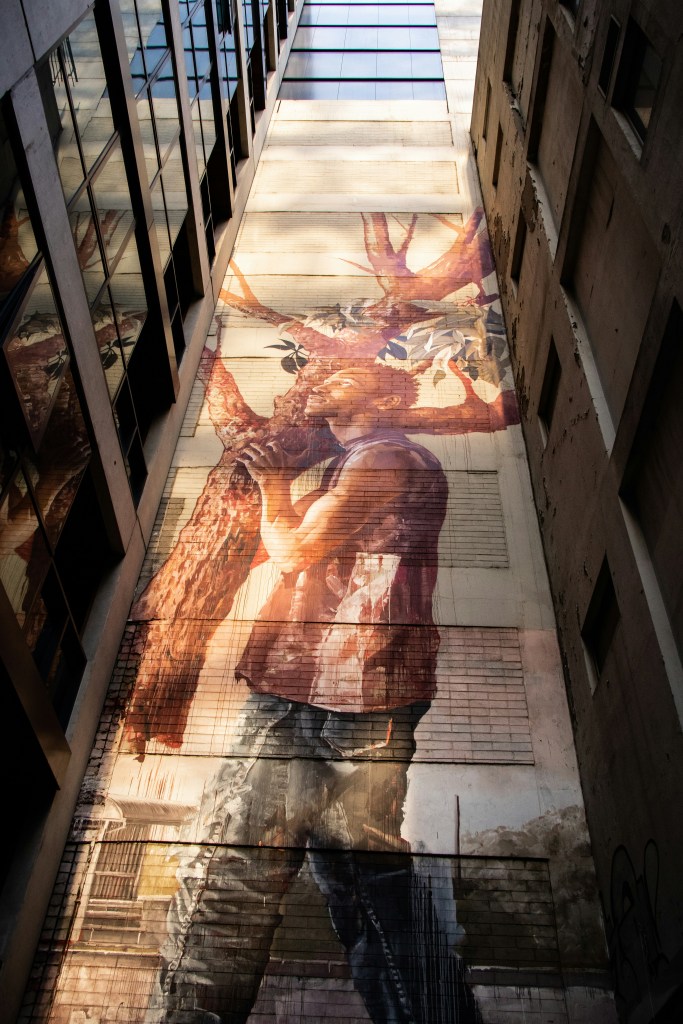
Religious street art
Individual artists, craftspeople, and workshops engaged in sacred art production
Stained glass, iconography, sculpture, metalwork, and devotional objects
Contemporary sacred art and evolving liturgical aesthetics
Sacrum et Decorum is published in both Polish and English and is indexed in DOAJ, ERIH PLUS, EBSCO, and other major academic databases. It is an open-access publication, and authors retain full copyright under a Creative Commons CC BY 4.0 licence.
The journal welcomes original, previously unpublished scholarly articles making a substantive contribution to the field. In addition to full research articles, shorter contributions – including reviews, source materials, and artists’ reflections on their own practice – are also invited. Submissions in English are particularly encouraged.
Full author guidelines, technical requirements, and submission information are available at the journal’s website.
the Lord is my shepherd and I / do not want to / lie down in your pastures / of fake grass and chlorinated pools / where the sun beats down on / our languid bodies and we are told / this is good even / though the heat feels like noise and / our thoughts have slowed / like tar
and you have closed / the entrances to the valley of / the shadow of death and / you have told us the shadows / have been banished / nothing to see here but I / want to see what that looks like and / you say I’m dwelling on the wrong things / why not dwell here where / there is a banquet that we will take / pictures of and post them so / those who admire us and those / whose admiration feels like / spite and those whose spite makes us feel / admired or at least victorious / so that they can see and try / to forget about us or talk about us / and surely / goodness and mercy will follow us all / the days of our life just in case / we hold still / long enough to / feel how much / we miss it
℘℘℘℘
Martine van Bijlert is a poet, writer, and artist who grew up in Iran, now lives in the Netherlands, and in between worked as an aid worker, researcher, and diplomat, mostly in Afghanistan. She is the author of the poetry collection Peace, Peace They Say. This was first published in Hot Pink Magazine.
I have often asked myself a seemingly unanswerable question. Over and again, I have wondered, What will happen to G?d in the not-so-distant future when all of us earthlings will have perished, when, as a result of our plundering of this precious Earth we will have gone the way of the dodo bird and the passenger pigeon? What will happen to G!d?
I have wondered out loud, and I have pondered in the quiet of my heart.
With the Torah or Talmud open before me, their ancient black letters speaking to me from the past, I have wondered.
In the woods alone, among the trees and beside the water, watching the sunset, listening to the geese, I have wondered, What will happen to G?d when we earthlings are gone?
In the evening, when the sun has set but the darkness we earthlings have banished hasn’t come, I have wondered. In the quiet of the night, when many sleep and few are listening as a distant owl hoots, I have wondered, What will happen to G!d?
In the cacophony of the city, with cars honking and trolleys squeaking, with voices of many languages blending together and people of every hue weaving past each other, I have wondered, What will happen to G?d when we earthlings are gone, our demise the result of our disregard for this precious Earth and each other?
As candles flicker before me, welcoming a day of rest and celebration, when my heart quiets and peace settles over my home, I have wondered, What will happen to G!d?
And every time, in every place, the same answer has welled up within me. Every time, in every place, I have heard, I have felt, I have experienced the same answer.
G!d will endure. G?d will survive. G!d will always be.
Brokenhearted, consumed by grief, but ever-resilient, the Mystery, the Spirit, the Wonder will abide, never forgetting, always remembering,
when we earthlings are gone.
℘℘℘℘
Katy Z. Allen is a poet and a devoted lover of the more‑than‑human world. A retired rabbi of an outdoor congregation, she has also served as a healthcare chaplain, co‑founded a Jewish climate organisation, and works as an eco‑chaplain. She is a member of the LGBTQ community and has been writing in one form or another throughout her life. Her poetry has appeared or is forthcoming in Amethyst Review, The Bluebird Word, and Art on the Trails: Number 9, among other venues. Her book, A Tree of Life: A Story in Word, Image, and Text, was published by Strong Voices.
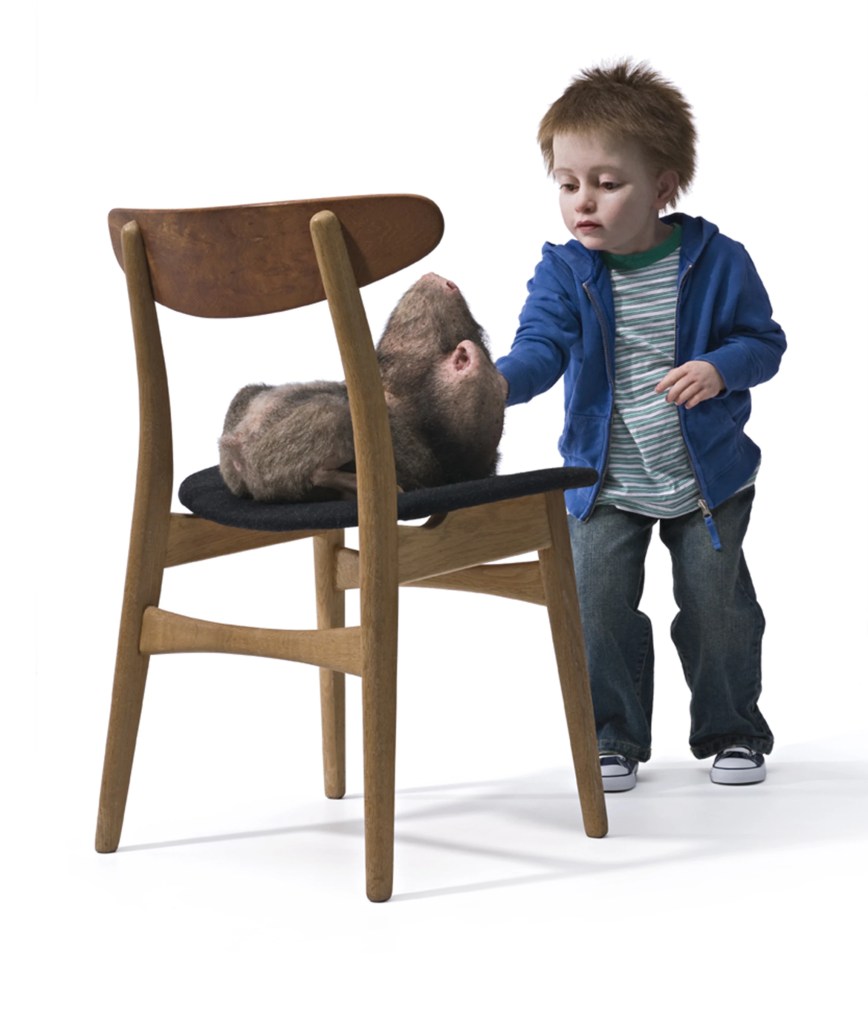
Patricia Piccinini, Doubting Thomas, 2008. Silicone, fibreglass, human hair, clothing, chair, 100 x 53 x 90 cm. McClelland, Langwarrin, Australia. Photo by Mark Ashkanasy.
‘Reach out your hand and put it in my side’ moved at hearing of Thomas’s act – that extraordinary moment its intimacy, the invitation to trust and touch, imagination travels to the theatre with gowned and masked figures bent in concentration over human souls prone, delivered to the knife the testing, probing fingers both intimate and distant in their sides.
℘℘℘℘
Chris Ringrose is a poet and fiction writer living in Melbourne, Australia. His latest poetry collection is Palmistry (ICoE Press, 2019). Creative Lives, a collection of interviews with South Asian Writers, was published by Columbia UP in 2021.
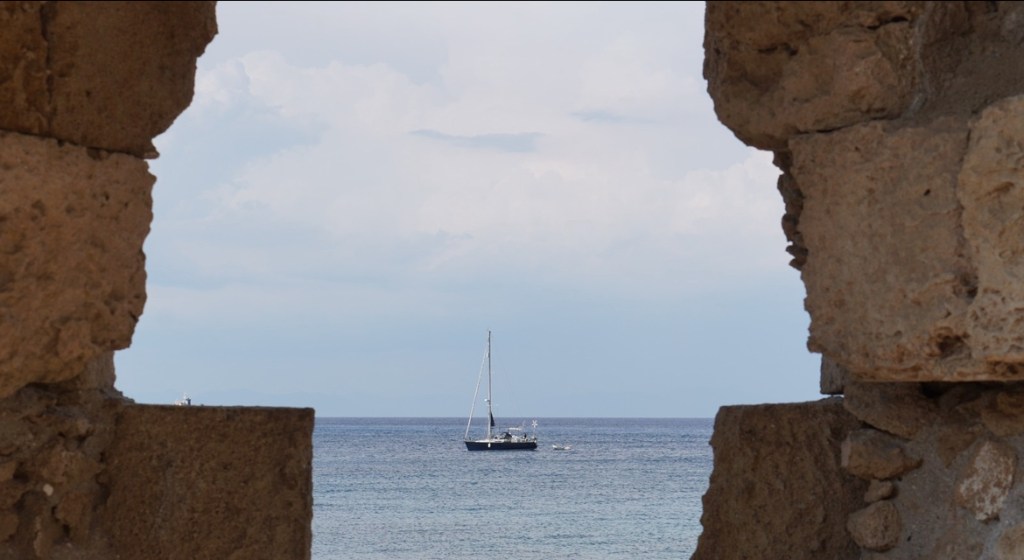
Do you ever gaze upon the ocean
and fall quiet,
struck by its vastness,
by the way it stretches beyond sight,
yet answers to a shoreline?

A body so immense,
it feels eternal,
yet born of a Presence
that called it into being.

It remembers beginnings.
It foreshadows endings.

It has claimed ships
and carried them home.
It has held both storm
and stillness in the same breath.

And I wonder,
what kind of God
writes himself into water and wind,
into tide and undertow,
into depths no eye can measure?

Somehow,
I find myself in its rhythm,
my thoughts rising and retreating
like waves surrendering
to an unseen hand.

In its ceaseless motion,
I learn submission.
In its return to shore,
I glimpse grace.
℘℘℘℘
Buki is an emerging poet exploring love, grief, identity, and the quiet thresholds of becoming, shaped by her life across Nigeria, the UK, and the USA. Having only recently begun writing, she uses restrained language and intimate imagery to trace the spaces between fear and tenderness. Her work has been published in Wingless Dreamer and is shared on Instagram and Substack.
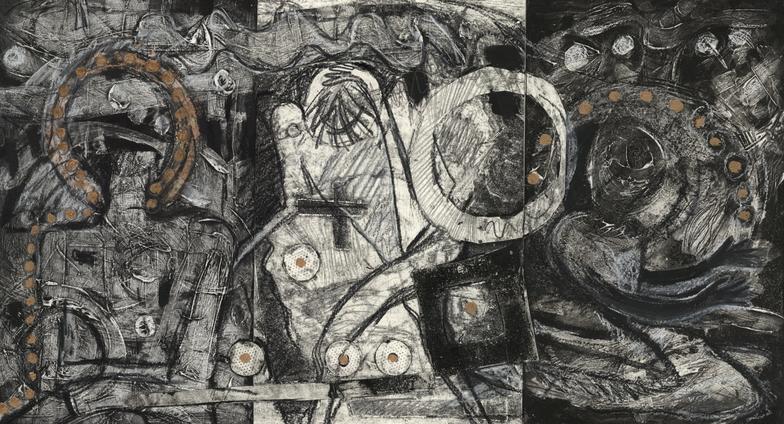
Mary Twomey, Rich Man, Poor Man, Beggar Man. Silk aquatint, monotype, collagraph, drawing, 25.4 x 53.34 cm. Private collection.
If you’re a poet who has ever found yourself drawn to the figure of Jesus of Nazareth – whether in faith, doubt, curiosity, or outright resistance – Wayfare magazine has a contest with your name on it.
The inaugural ‘Behold the Man!’ poetry contest is open now, with submissions accepted until 29March 2026 (Palm Sunday, fittingly). The prize pool is generous, with honorable mentions also published in Wayfare.
What makes this contest particularly interesting is the scope of the invitation itself. Wayfare is explicitly seeking poems from any faith tradition – or none. The subject is Jesus of Nazareth, but the angle of approach is entirely yours. Skeptic, believer, agnostic, curious outsider – all are welcome, provided the poem engages its subject with freshness and genuine thought rather than settling for easy praise or easy dismissal.
The reference poems cited in the contest announcement give a sense of the range they’re after: Gerard Manley Hopkins’s rapturous devotion, Mary Oliver’s tender human sympathy, James Wright’s moral ambiguity, Anne Sexton’s anguished wrestling. These are poems that take a stance, feel something, and refuse to look away. That’s the company this contest wants to keep.
A few practical notes: you may submit up to two poems, each no longer than 50 lines (or 300 words for prose poems). Judging is blind. Simultaneous submissions are fine. Poems must be unpublished and entirely human-written.
Full guidelines and the submission form are available here.
I cursed God and there was nothing. He must be dead.
I never thought he might have been waiting – to see how far I’d go.
℘℘℘℘
Jim Murdoch has been writing poetry for fifty years, with his work appearing in a wide array of literary magazines and websites – many now vanished, and a few, such as Ink Sweat & Tears and Poetry Scotland, still holding their ground. For a decade, he ran the literary blog The Truth About Lies before settling into a quieter life in Scotland with his wife and, when it suits her, the neighbour’s cat. He – i.e., Jim, not the cat – is the author of two poetry collections, a short story collection, and four novels.
Roots coil beneath the soil, veins of the earth pulsing with quiet grace. Rain seeps, soft as mercy, through clay and stone, and the green shoots respond like hymns that never end. I walk among cedars, hands brushing bark, fingering the faith written in rings of patience. God is here, in fibre and leaf, in the slow breathing of the world, in every shadow and shaft of light.
℘℘℘℘
Khayelihle Benghu lives in Johannesburg, South Africa, and has been writing since 2008. Alongside her writing, she nurtures a deep love for photography, with a particular focus on the natural world.