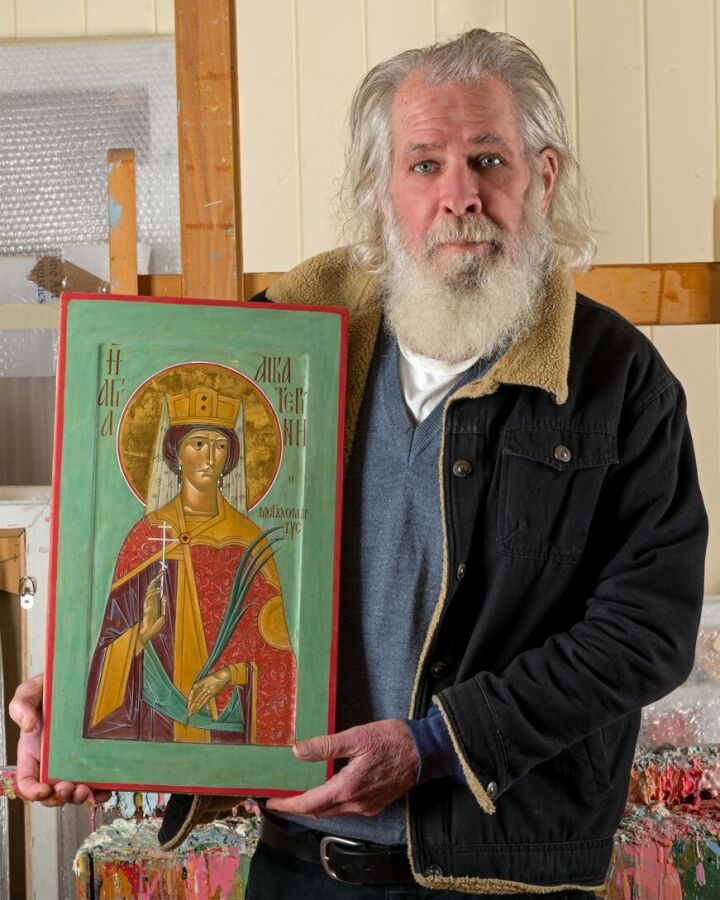
Leonard Brown: Painting the Celestial

The survey exhibition of the work of painter Leonard Brown is currently on exhibition at the Ipswich Art Gallery in Queensland until 14 June 2026. Curated by the distinguished art historian Sasha Grishin, this survey explores his distinctive abstract works that exemplify his interest in formal geometry and handmade mark-making. Alongside this body of work are his religious icons drawn from the Orthodox tradition. Together, they explore the work of an artist centrally concerned with Christian spirituality and transcendence.

The art of Leonard Brown is a unique phenomenon in Australian art. He is highly regarded as a painter of sublime, minimal abstract canvases, and his paintings are held in major public art collections throughout Australia, including the National Gallery of Australia, the Queensland Art Gallery, the National Gallery of Victoria, the Art Gallery of South Australia, and the Art Gallery of New South Wales.

At the same time, Leonard Brown is an accomplished icon painter following the ancient conventions and methods of Byzantine and Medieval Russian icon painting. Many of his icons are consecrated and in liturgical use in churches throughout the world, find homes in domestic environments, and are held in private and public art collections. He is also a figurative artist of repute, the winner of the Brisbane Portrait Prize (2019), and has been awarded numerous other art prizes, including The Blake Prize for Religious Art (2010).

Painting the Celestial is the first comprehensive retrospective exhibition of Leonard Brown’s work to be presented in Australia and traces the artist’s development over more than five decades. The Ipswich Art Gallery is being transformed for this exhibition to include a gold-radiating sanctuary where Leonard Brown’s icons can be sympathetically displayed. His abstract paintings are being shown in greater numbers and in more depth than ever before. To enter the world of Leonard Brown’s art is to embark on a transformative experience. Both his painted icons and abstract works can transport the viewer to a different, more spiritual plane of existence.
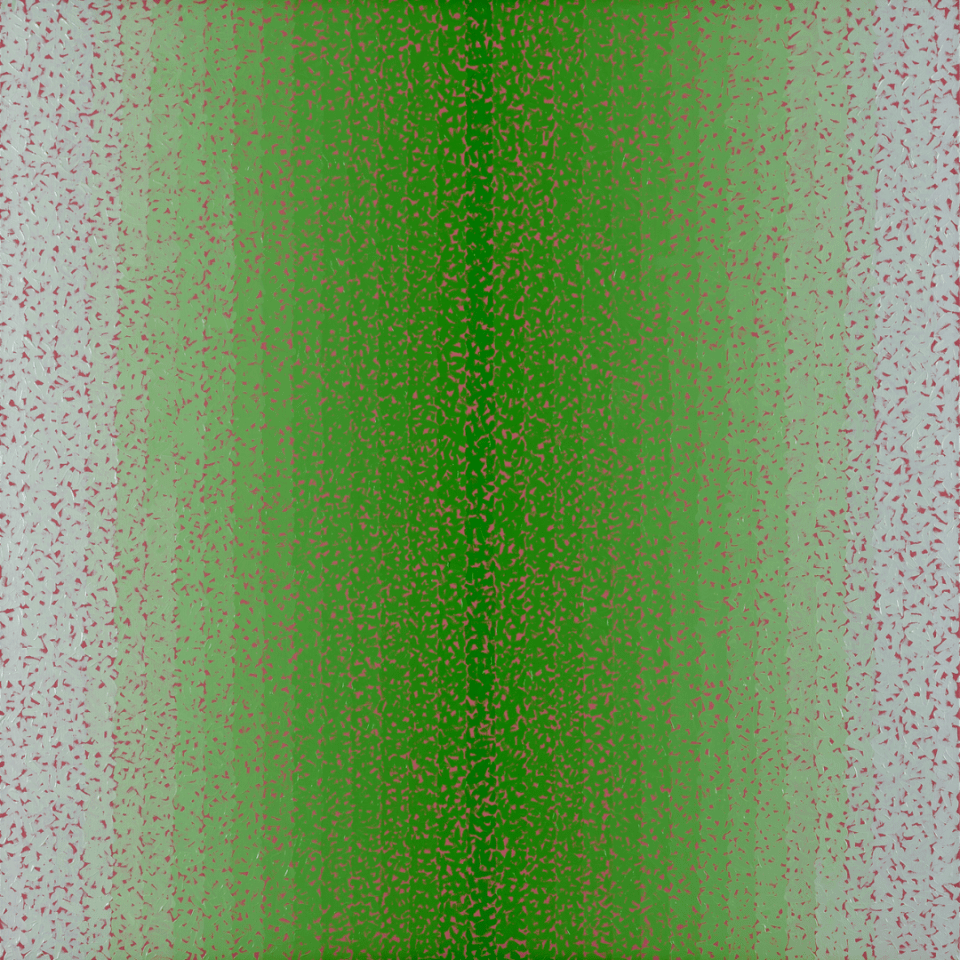
Leonard Brown, To annihilate all that’s made to a green thought in a green shade, 2015.

Call for Papers: Bible and Visual Culture unit at SBL (International Meeting)

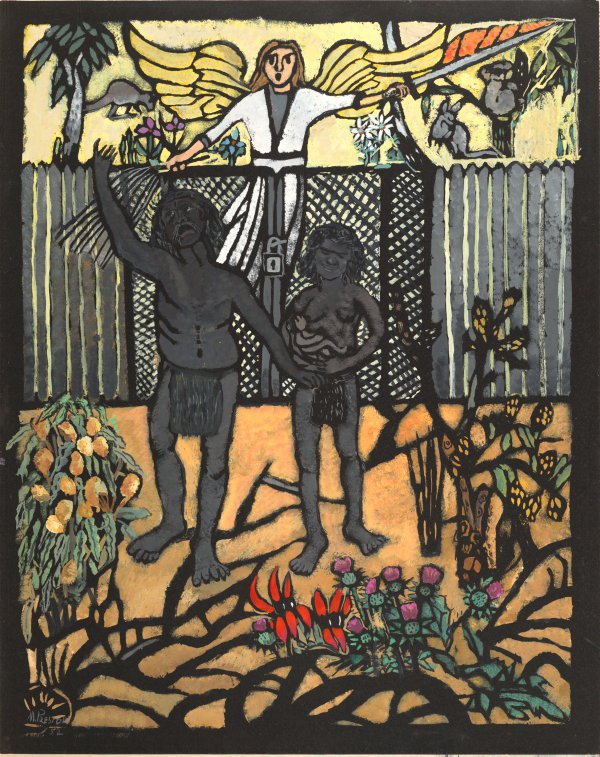
Margaret Preston, The Expulsion, 1952. Colour stencil, gouache on thin black card with gouache hand colouring, 60.5 x 48.5 cm. Art Gallery of New South Wales, Sydney, Australia.

We are pleased to invite you to the Bible and Visual Culture unit meeting, taking place 5–9 July 2026 in Adelaide, Australia, as part of the Society of Biblical Literature International Meeting.

The Bible and Visual Culture unit is dedicated to the critical study of how biblical texts, themes, and figures are interpreted, adapted, and reimagined through visual media—from ancient mosaics and manuscript illuminations to contemporary film, television, video games, advertising, and public art. These visual interpretations have shaped, and continue to shape, the ways biblical texts are received, interpreted, and contested within the wider cultural imagination.

The unit is intentionally interdisciplinary, drawing on art history, film and theatre studies, media studies, musicology, gender studies, trauma studies, postcolonial criticism, and more. Whether examining biblical motifs in cinema, exploring representation in public art, or analyzing the commodification of biblical imagery in advertising, it highlights the interpretive power of the visual and its capacity to illuminate aspects of biblical reception.

We warmly invite established scholars and PhD candidates to submit a proposal on any topic related to the visual reception, interpretation, or representation of biblical texts—historical or contemporary, theoretical or methodological. Presentations will be thirty minutes, including discussion.

Given our location in Adelaide, we particularly welcome papers that engage with Australian art featured in Australian galleries, museums, and public spaces. How have Australian artists interpreted biblical narratives? What role does biblical imagery play in Australia’s visual culture, from colonial-era works to contemporary Indigenous perspectives? This meeting offers a unique opportunity to explore these questions in context.

Paper proposals should be submitted here and should include your name, institutional affiliation, paper title, and an abstract of approximately 250 words. Proposals may be submitted at any time before 15 January 2026. All presenters must register for the SBL International Meeting. Further details about the Adelaide meeting are available on the SBL website.

Amanda Dillon and Jason Goroncy
Coordinators, Bible and Visual Culture Unit