Les Less Miserable: The Poetic Journey of Les Murray

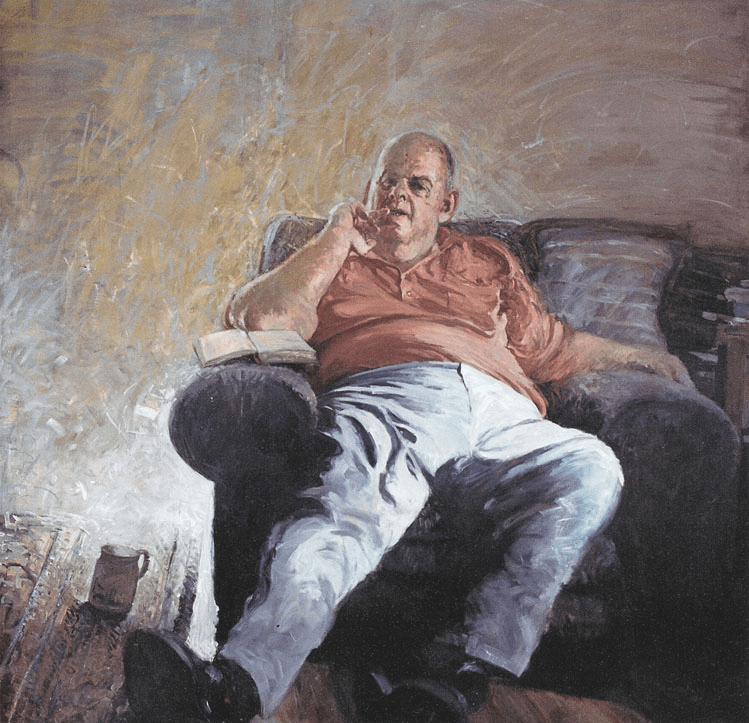
David Naseby, Les Murray, 1995. Oil on canvas, 179.5 x 184.5 cm. National Portrait Gallery, Canberra.

The recent death of David Malouf, aged 92, has left many readers grieving the loss of a writer whose prose was marked by unostentatious care, quiet precision, and a deep humaneness. Malouf had a rare gift for tracing the places where the material meets the immaterial, where the ordinary world thins and something luminous shows through. In an age when algorithms increasingly choose our words for us, his painstaking craftsmanship feels all the more precious.

That same attentiveness to mystery and meaning shaped the work of Les Murray, another of Australia’s most distinctive and resilient poetic voices. Murray never wrote a cliché. His poems –gossamer, surprising, and often startlingly tender – stood in contrast to his rough, laconic exterior. Behind that exterior was a man shaped by a lonely and traumatic childhood, one who spent his career descending into the darker places of human experience and returning with light.

Murray refused easy certitude. He resisted the tyranny of the mob. He wrote with a spiritual clarity that was never sentimental. In his poem on the death of his father, Cecil, he offers a line that still startles with its fierce love and defiance: “Fuck them. I wish you God.

This is Murray at his most distilled – a poet of hope, not optimism. Hope, for him, was not a mood but a posture: a way of standing in the world that acknowledged suffering without surrendering to it.

If you’d like to experience something of that spirituality– its toughness, its radiance, its refusal to look away – you are warmly invited to Michael McGirr’s talk, ‘Les Less Miserable: The Poetic Journey of Les Murray’, next Wednesday, 13 May, at 6pm at St Peter’s Eastern Hill in Melbourne.

Michael will explore Murray’s life, his craft, and the strange, grace-filled places where his poetry continues to speak. It promises to be an evening of depth, humour, and insight, very much in the spirit of Murray himself.

And if Malouf’s passing has stirred something in you, you may also appreciate Michael’s recent tribute to David Malouf in Eureka Street, a beautiful reflection on a life spent enlarging the imaginative world of this country.

Call for Papers: Bible and Visual Culture unit at SBL (International Meeting)

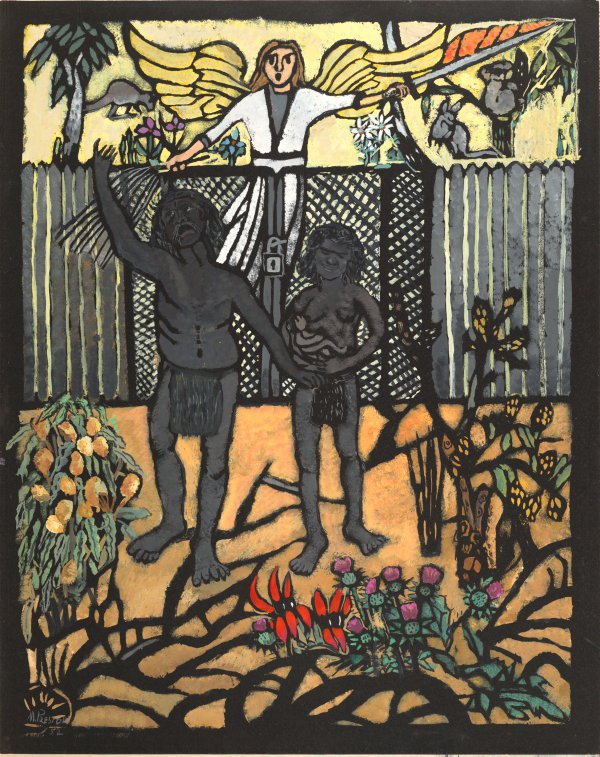
Margaret Preston, The Expulsion, 1952. Colour stencil, gouache on thin black card with gouache hand colouring, 60.5 x 48.5 cm. Art Gallery of New South Wales, Sydney, Australia.

We are pleased to invite you to the Bible and Visual Culture unit meeting, taking place 5–9 July 2026 in Adelaide, Australia, as part of the Society of Biblical Literature International Meeting.

The Bible and Visual Culture unit is dedicated to the critical study of how biblical texts, themes, and figures are interpreted, adapted, and reimagined through visual media—from ancient mosaics and manuscript illuminations to contemporary film, television, video games, advertising, and public art. These visual interpretations have shaped, and continue to shape, the ways biblical texts are received, interpreted, and contested within the wider cultural imagination.

The unit is intentionally interdisciplinary, drawing on art history, film and theatre studies, media studies, musicology, gender studies, trauma studies, postcolonial criticism, and more. Whether examining biblical motifs in cinema, exploring representation in public art, or analyzing the commodification of biblical imagery in advertising, it highlights the interpretive power of the visual and its capacity to illuminate aspects of biblical reception.

We warmly invite established scholars and PhD candidates to submit a proposal on any topic related to the visual reception, interpretation, or representation of biblical texts—historical or contemporary, theoretical or methodological. Presentations will be thirty minutes, including discussion.

Given our location in Adelaide, we particularly welcome papers that engage with Australian art featured in Australian galleries, museums, and public spaces. How have Australian artists interpreted biblical narratives? What role does biblical imagery play in Australia’s visual culture, from colonial-era works to contemporary Indigenous perspectives? This meeting offers a unique opportunity to explore these questions in context.

Paper proposals should be submitted here and should include your name, institutional affiliation, paper title, and an abstract of approximately 250 words. Proposals may be submitted at any time before 15 January 2026. All presenters must register for the SBL International Meeting. Further details about the Adelaide meeting are available on the SBL website.

Amanda Dillon and Jason Goroncy
Coordinators, Bible and Visual Culture Unit

Open Lecture: Art and the Christian in an Age of Mass Culture

Illustration by Patrick Bremer, in The New Yorker.

The Centre for Theology and Public Issues at the University of Otago has extended an invitation to an open lecture by Professor Ephraim Radner.

The lecture will be on ‘Art and the Christian in an Age of Mass Culture: A Theological discussion on a famous argument of Walter Benjamin regarding art and its reproduction’.

Time: Tuesday 13 February at 5:15pm – 6.30pm (NZ time)

Place: Archway 2, University of Otago, Dunedin, or livestreamed here.

Beauty as Witness: Art, Poverty, and Ethics in Christian Theology

Beginning in 2017, Ridley College’s biennial Evangelical Women in Academia conference is a women-only event seeking to platform, promote, encourage, train, equip, and inspire Christian women in academic work across Australia. This year’s conference keynotes are given by constructive theologian Dr Natalie Carnes (Baylor University) teaching on ethics, art, and poverty in Christian theology.  

Friday’s event will feature Aboriginal and Torres Strait Islander artist and educator Safina Stewart speaking about art, faith, and indigenous spirituality. Safina will also lead in some hands-on responsive creative work of the participants’ own. 

In addition, short papers and workshops/seminars provide an opportunity to learn from a wonderful lineup of Australian Christian women HDR students, academics, writers, and practitioners.

To find out more, visit here.

Uncommon Goods: Conference and CFP

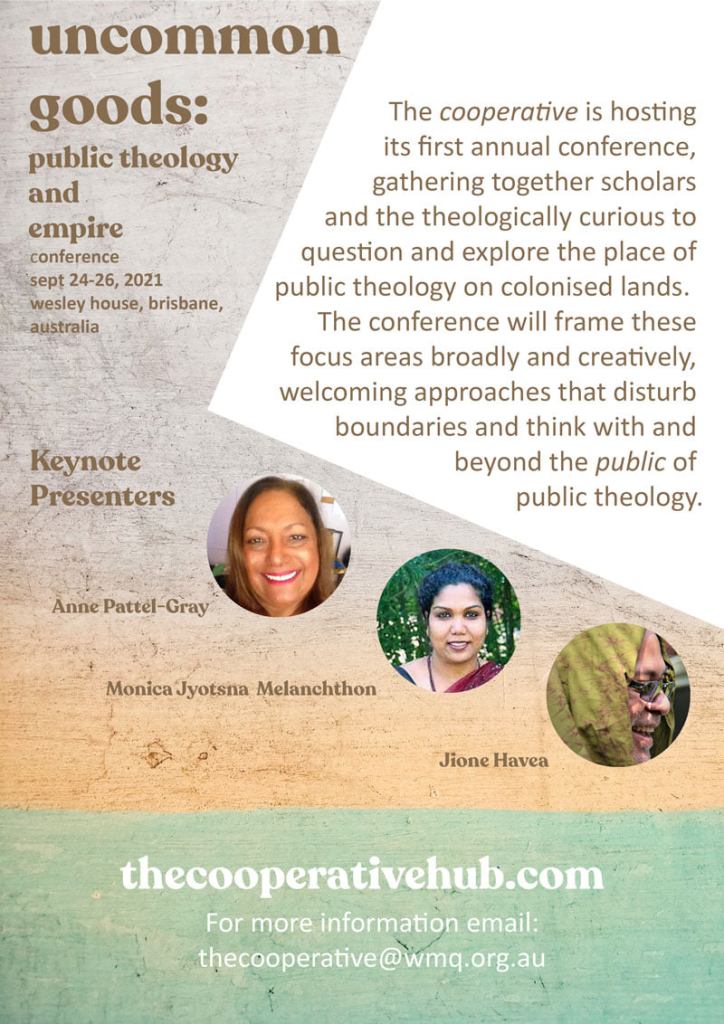
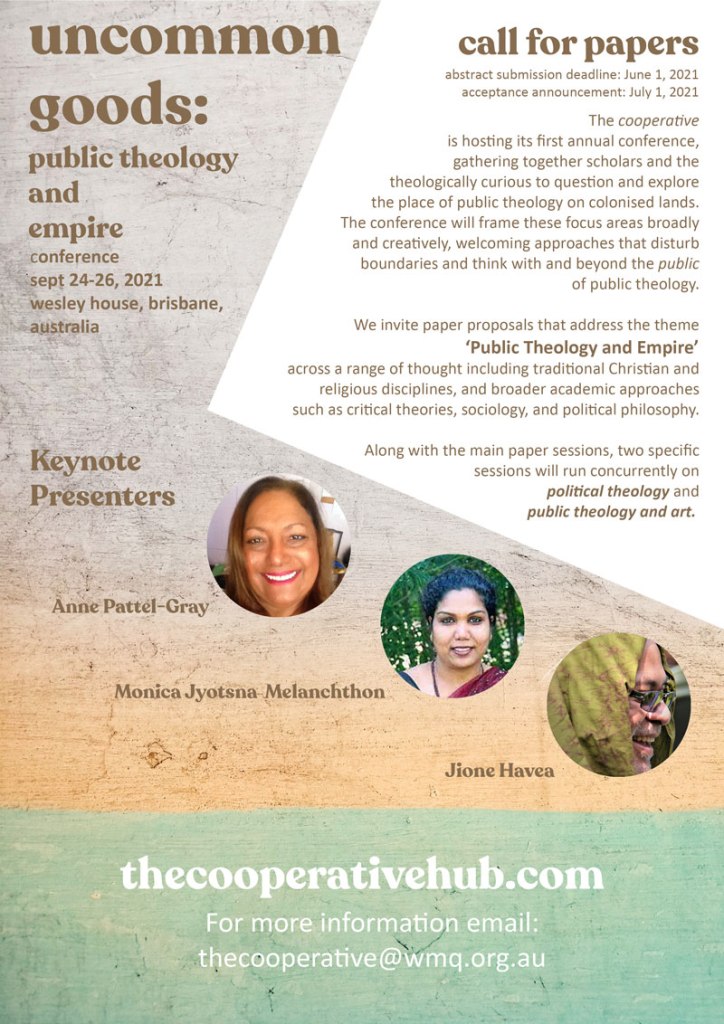
We imagine a brand space for public theology, one that breaks down disciplinary boundaries, and one that seeks to learn, and to disrupt, its own discourse. We think there should be a place in Australia for a public theology like this! The Cooperative was launched to work towards this goal, to make space for unlikely conversations, and to gather with as many collaborators as possible in asking questions about the common good.

Our first conference, taking place on invaded land, will trouble these questions and ask what it means to be a public, have a commons, in the aftermath of colonialism. Our call for papers welcomes scholars from all fields and looks forward to lively discussion.

– Dr Janice McRandal, Director of The Cooperative

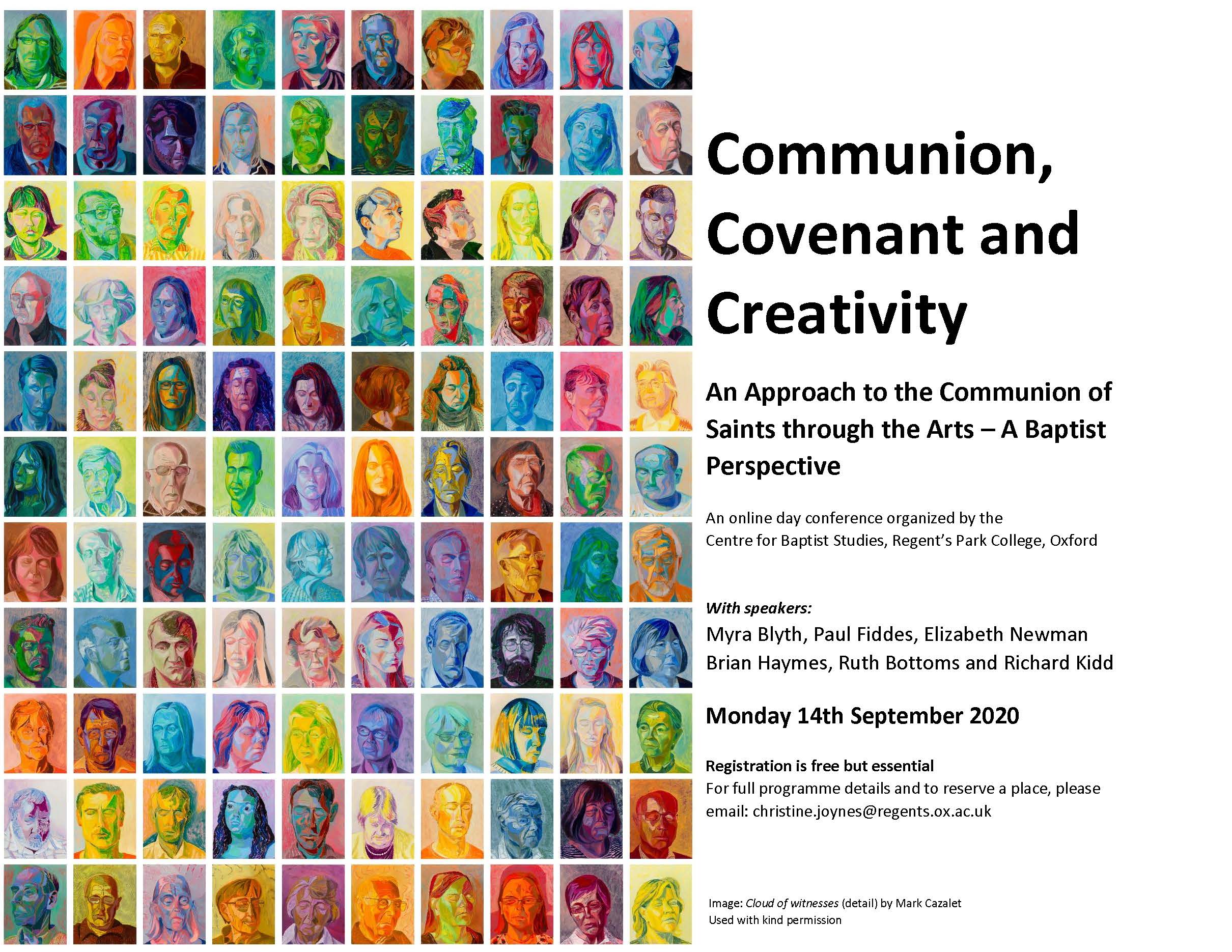
Communion, Covenant, and Creativity

Image

Conference Postponed

postponed-rubber-stamp.jpgOur Vision, Voice, and Vocation Conference has been postponed until further notice.

The unforeseen increase of COVID-19 and the associated restrictions it has brought to our lives at this time, including restrictions on public gatherings and to travel, render this decision both unfortunate and predictable.

We remain committed to running the conference when it is safe to do so. Further information about that will be posted here on the ATA website.

If you haven’t already, please consider subscribing to the ATA website and/or following the work of ATA via social media – whether on Twitter or Facebook.

Vision, Voice, and Vocation – Registrations and a Call for Papers

Vision, Voice, and Vocation_ Arts and Theology in a Climate for Change

We are excited to provide an update about our upcoming conference – Vision, Voice, and Vocation.

Keynote speakers and a rich offering of short papers, creative presentations, and workshops, will lead us in stimulating conversation about what roles the imagination and the vocations of the artist play in navigating and shaping the complex and changing climates of contemporary life.

The keynote speakers are Emmanuel Garibay (a visual artist from the Philippines), Lyn McCredden (an academic and poet from Melbourne), Jione Havea (a Melbourne-based bible scholar), Trevor Hart (a theologian and priest from Scotland), and Naomi Wolfe (a Melbourne-based historian). Emmanuel Garibay will also be Artist-in-Residence, and his presentation on Thursday 16 July will be open to the public.

Registrations are now open for the conference, with early bird and day-only rates available.

And we are issuing a call for short papers and presentations. Academics and practitioners in the fields of theology, visual art, music, performance, literature, cultural studies, poetry, philosophy, and/or history are invited to send an Abstract (approx. 250 words) of their proposed presentation, plus a short bio, to Jason Goroncy (email) by 31 March 2020.

kissclipart-registration-now-open-png-clipart-the-big-marketin-e95e488059416815

Vision, Voice, and Vocation

Vision, Voice, and Vocation_ Arts and Theology in a Climate for Change

We are very excited to announce that Art/s and Theology Australia will hold its first conference on 16–19 July next year.

This four-day event will provide a unique conversation space for artists, performers, creatives, academics, and activists, to consider the vital role of the imagination in today’s complex climates – social, cultural, environmental, political, racial, religious, spiritual, intellectual, etc.

It will also invite conversation around further questions: What kinds of change? What are the grounds and manner of hope, transformation, and resilience? What might the arts and theology have to contribute to such discourse and action, if anything? How do we attend to the margins of this discussion, and speak and act more holistically as communities of change?

More details here.

Please:

  1. save the date
  2. help spread the word
  3. get in touch if you would like to offer an academic paper or creative presentation

Review: ‘Vessels: Theology and the Arts Symposium’

66683917_10158610995701982_9022041562204340224_o.jpeg

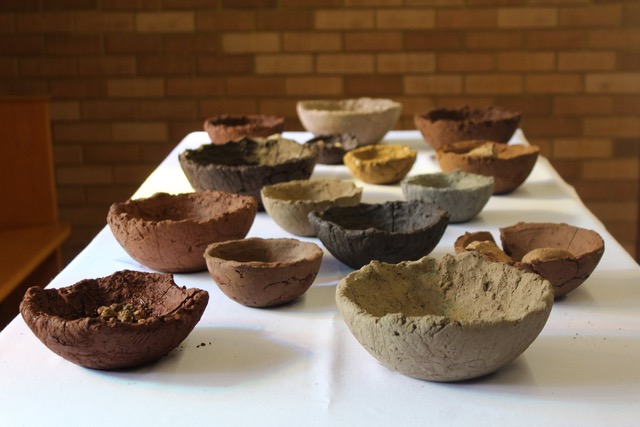
Why do we as humans crave acceptance and the space to be seen and heard? That was the initial driving force behind wanting to bring together like-minded individuals who share an interest in the interdisciplinary field of theology and the arts. It was out of sheer frustration and loneliness that I decided to do something about finding my theological/artistic tribe. So earlier this year, on the weekend of 12–14 July, the Anglican Parish of Woy Woy hosted ‘Vessels: Theology and the Arts Symposium’.

The goal of this symposium was to draw together theologians, practicing artists, clerics, philosophers, and poets to explore the relationships, intersections, and challenges that exist when the arts and theology come together. The three-day forum offered participants a multimodal and experiential platform to encounter the interdisciplinary interactions between the creative arts and theological theory. Over the three-day event, seventy participants listened to and interacted with five extraordinary keynote speakers, and a further seventeen short paper presentations. Additionally, those involved had the opportunity to participate in three creative workshops, listen to poetry performances, an interactive prayer space, and engage with the artworks displayed in the exhibition.

The organisation of a symposium, however, is an interesting adventure. I would first like to thank all the keynote speakers – Glenn Loughrey, Dorothy Lee, John McDowell, Rod Pattenden, and Chris Bedding – who, thanks to their wonderful contribution, and their commitment to continuing the conversation in the interdisciplinary space, enabled many others to experience a wide range of creative theological intersections. From Chris Bedding’s Pirate Faith to John McDowell’s analysis of theology and the art of popular cinema. From the confronting truths of Glenn Loughrey’s investigation of the impact of neo-colonialism and nostalgia on the perception of Aboriginal art and spirituality to the poetry of Dorothy Lee and her exploration of the transfiguration in the Gospel and poetry. To, finally, a reflection on what’s next by Rod Pattenden with his exploration of the tensions that exist between art and theology. These contributions gave us much food for thought and conversation.

Throughout the process of developing the program for the ‘Vessels’ symposium, liturgy and music was an important consideration. As I believe it is in our communal expression of praise and worship through liturgy where we are immersed at the intersection between human creativity and the grace of God. As such it was imperative to reflect on and create a liturgical space where the participants felt that the worship was not separate from the proceedings, but a natural part of the experience. The driving force behind the liturgical landscape of the event was the consummate teacher, composer, and musical liturgist Michael Mangan. Michael worked with the St Luke’s community, made informed musical choices and contributed significantly to the liturgical style of the event. His passion for liturgical music and liturgy is palpable, and one cannot but be impressed with his skills at bringing a community into the worship space.

It takes courage to walk into a theological space that is for many, outside their comfort zone. I have been asked on a number of occasions: Are you wanting to be an artist or a theologian, because surely you cannot be both? I believe, that for me, I cannot be one without the other. It is who I am, and who I am becoming. In light of this observation looking at the creative arts theologically is not just an academic pursuit, but it is in fact deeply practical in consequence and orientation. My thanks go to all participants who proposed and presented short papers, workshops, interactive prayer spaces, artworks, and poetry performances. It is heartening to hear so many people adding their voices and creative skill to this growing area of inquiry. The diversity of the creative input at this symposium was astonishing, and it highlighted the wonderful contributions of people in the fields of ecclesiastical ornamentation, poetry, philosophy, and many other disciplines.
67328181_346754672669810_1696084994667053056_o.jpeg

I would like to make special mention of Rebekah Pryor, without whom this event would not have been as well organised. Rebekah is responsible for the professional curation of the exhibition, artist statements, exhibition catalogue, and co-convener. Working with Rebekah on this project was incredibly beneficial, as creative collaboration is key to having the opportunity to challenge oneself and take on board exciting perspectives and ideas.

It is my hope that from this event further conferences, communities, grants, prizes, and conversations are initialised. I now believe I have found my tribe, and I look forward to the next event.

℘℘℘℘

ALEXANDRA BANKS IS A PHD CANDIDATE IN THE FACULTY OF THEOLOGY AT ST FRANCIS’ THEOLOGICAL COLLEGE, CHARLES STURT UNIVERSITY.