Articles

Theology and the Arts, at Whitley College.

In February 2019, I will be coordinating and teaching an intensive class on Theology and the Arts at Whitley College in Melbourne. The class is an introductory-level doorway into a range of other related subjects, including those on film, on imagination, on poetry, and on creativity and spirituality. It is aimed at practising artists, theologians, curators, pastoral workers, and anybody else with interests in the arts and/or Christian theology.

This year, I am delighted to announce that a number of wonderful people will also be contributing: Peter BlackwoodAnne MallabyPádraig Ó Tuama, Safina Stewart, Christina Rowntree, Rod Pattenden, Joel McKerrow, and Libby Byrne.

The class is open to all, and is available for study credits at Undergraduate or Postgraduate levels, or you can participate as an Audit student.

For more information about the class, or to apply, visit here.


Theology and the Arts - Poster 2018.jpg

℘℘℘℘

JASON GORONCY IS A THEOLOGIAN, ARTIST, AND TRY-HARD POET WHO LIVES AND PLAYS ON WURUNDJERI LAND.

Finding Christ in Asia: The Great Disrupter

Emmanuel Garibay, ‘Bathala’, 1997. oil on canvas, 182.88 x 137.16cms. Collection of the artist.

Striding out of the picture plane, this figure of Christ seems to rip through the surface of the work, hammer and crowbar in hand ready to disrupt the very order of things. No gentle saviour or calm man of peace who would be at home in the churches of the middle class, this figure concentrates his gaze on some point situated in the world of the viewer. He is striding with urgency towards an appointment with the future. Two sets of eyes, one fixed perhaps on the viewer, the other on this moment of decision and disruption. This Christ is the Liberator, disturber, prophet, and builder. He has in one hand a hammer to build; in the other a crowbar to pull apart. One can imagine that this tool could have even been useful in pulling out the nails in his hands. This is a figure of fierce passion and decisive action, an unstable, unpredictable force for renewal, the iconoclast, a breaker of images, with eyes on the emerging signs of justice and compassion.


This is the work of Filipino artist Emmanuel Garibay, an artist who has received wide recognition in his native country for his challenging and moving realist images of Filipino society. He is a person of great warmth with a steely eye for injustice and pompous self-righteousness. In a country that is mainly Christian, he scrutinises the conventions and comfortable icons of his culture to shake out the new possibilities of hope and renewal. His works are often funny, ironic, and full of curiosity and compassion. They often represent the poor in dignified roles while upending those in power who are too familiar with their social prestige and the trappings of position. When he turns to religious imagery he is particularly sharp and incisive. This Christ is not a light-skinned person of European origin, which is the manner in which the Spanish depicted the figure during the 400 years of colonial rule. Nor does he fit the glossy expectations of TV evangelists and modern-day miracle workers that have arrived through American pop culture. This is an indigenous Christ, who arises within the culture as a force for hope and liberation.

The European colonialisation of the Philippines stands out in contrast to most other countries in Asia. While the rest of the region has maintained distinctive indigenous cultures and religious expression, mainly through Buddhism, the Philippines has been subject to over 400 years of European colonisation. From the 1540s, the Spanish ruled this chain of over 700 islands, linked closely to trade and cultural links with their Latin-American colonies in Mexico and Cuba. This was followed in 1898 when the USA annexed the country as part of their colonial expansion. The country only found its independence in 1945 after the Second World War, and now boasts a population of over 100 million people. It is a country with a split personality, where the tourist brochures proclaim the citizens as the happiest people on earth, while its inhabitants continue to live under this colonial imagination, held captive by corruption and the forces of globalisation.

Garibay, through his lively and expressive works, provides a sympathetic window into this complex yet wonderful country. He also gives insights into the complex problems of colonisation and the challenge of seeing things as they really are. Garibay’s search for an Asian or indigenous Christ figure is at the centre of his work. In that search, he draws attention to the nature of our situation where we are often blind to the truth of things because we are cultured, because we see things as natural and self-evident when in fact they are mediated to us by our context. Simply put is the image of Christ a European one fair-haired and blue-eyed, or even perhaps a Middle Eastern one darker skin with a curly dark beard? Garibay peals off the skin that sticks to our eyes to realise how conditioned we have been to the figure of Christ who is at home within our culture and rendered as a safe citizen who obeys the laws. This familiar Christ is rather ineffective and finds no vocation as a prophet within our world.  The work Bathala renders the Christ as a disruptor of culture. It is representative of Garibays tendency in all his work, to wake us up to our blindness, and to awaken a Christ set free from stereotypes, churchly piety, and good manners, that in turn may upend the order of the things towards a more just and humane world.

 ℘℘℘℘

Emmanuel Garibay is an important artist from the Philippines who has gained wide recognition in his own country for his social realist painting and drawings. His works have been exhibited in Australia, Europe, and North America. His work has also been widely reproduced through many publications around the world as they explore issues of justice and the search for Christ in Asia. In 2011, the Overseas Ministries Study Centre (OMSC) published a 72-page book Where God Is: The Paintings of Emmanuel Garibaywhich provides a useful full-colour survey of his work.
Rod Pattenden is an artist, art historian, and theologian interested in the power of images. He lives and works on Awabakal land.

Riza Cages

Full of Grace (1).jpg
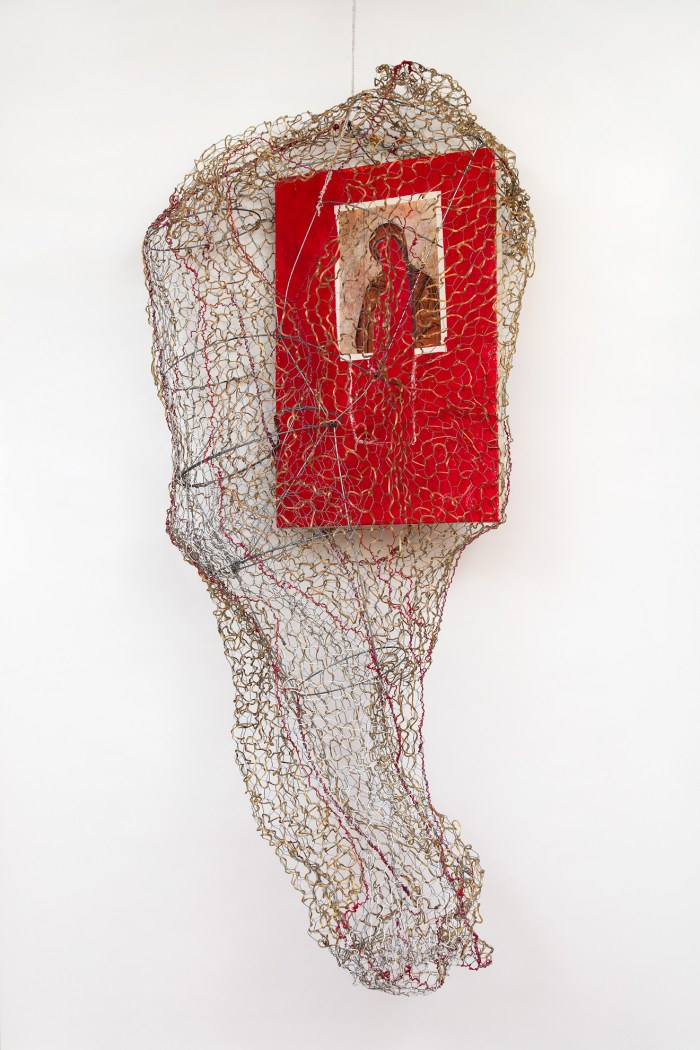
Alfonse Borysewicz, ‘Full of Grace’ (2017–18), 84 x 34″. Oil & Wax on Linen with Riza Cage.

Two years ago, a friend asked me to make a sculptural piece for her dance company. All of us involved in New York City had limited means and space, as artists are pushed out of this-once art capital. As such, I began to create these shapes out of chicken wire mesh with tomato wire stakes as its armature (the garden), wrapped with electrical/lamp/cable wire (offering a gold leaf like light and hue). Eventually, I filled these voids with paintings of mine and/or crumbled up pages from discarded icon books, thinking of the “throw away culture” so poignantly revealed in Pope Francis’s Laudato Si and of my own attempts to rescue and to recycle these images.

Icons have traditionally employed metal coverings with stones and emeralds, Rizas, to protect the sacred image. Same here. Recently, I met a Ukrainian woman at my art opening who didn’t appreciate what I was doing with her tradition of sacred icons. Slowly, I walked her through my creative process and offered her the possibility that I was not only rescuing these images but liberating them from discarded books, bringing them out into the open. She nodded and had a change of view. As evidenced in Star, a light for us to follow in this Advent season.

Also brought to my attention by various strangers (this is why the viewer is so important in the visual arts) was the realization that these Riza sculptures which to me reveal the sacred icon image outside of book form, as well as my own renderings, were in the shadows – literally, cages – that echo the tragedy unfolding in my own USA, the dystopia of incarcerating immigrant adults, families and children.

Star.jpg
Alfonse Borysewicz, ‘Star’ (2018), 30 x 12″. Collage with Riza Cage.

℘℘℘℘

Alfonse Borysewicz is a Brooklyn-based painter.

Christ You Made Me Wait

Christ
You made me
Wait

So long
Patience
Perfected
Her work
And now

I can leave you
Waiting
Too

℘℘℘℘

CHRIS GREEN IS PROFESSOR OF THEOLOGY AT SOUTHEASTERN UNIVERSITY IN THE USA. HE IS THE AUTHOR OF SEVERAL BOOKS, INCLUDING SURPRISED BY GOD AND THE END IS MUSIC, BOTH PUBLISHED BY CASCADE PRESS. HE IS ALSO A VISUAL ARTIST.

Vessels: Theology and the Arts Symposium

Vessels
Karly Michelle Edgar, ‘Vessels’. Paper and wax.

What does it mean to live in the in-between? As a trauma survivor, artist, and theologian, I actively seek out the edges of creative and scholarly domains. This is because my story and my lived experiences are not adequately represented at the centre of traditional ecclesiastical practice. Consequently, I work in the in-between spaces of: femininity and the Christian Church, living in the aftermath of sexual violence, mental health, spirituality, artistic practices, and transdisciplinary research. My artistic practice – specifically, faceted glass – provides the visual framework to bridge the gap between a theology of trauma, lived praxis, and contextual knowing.

I believe that the creative arts are an external action whereby ‘an individual or group’ can, in the words of Frank Burch Brown, ‘participate in sacred time and space and . . . [potentially] discover transcendent, timeless meaning’. Museums and churches are historically in the practice of visually documenting and curating humanity’s ongoing relationship with creation and Creator. It could be argued that ecclesiastical art forms such as architecture, stained-glass, and liturgical ornamentation contribute to the archiving and interpretation of humanity’s perpetually-unfolding creative response to the infinite self-communication between humanity and the divine. Ecclesiastical architecture and stained-glass windows have been a constant historical visual expression of Western Christian theological debate. The aim, however, of these art forms is to move those who encounter them beyond their own purely objective knowledge of reality, as if there is such a thing, and toward a curiosity of the incomprehensibility of God.

Yet, when one speaks of the creative arts as a significant avenue to generate and contribute to theological knowledge and spiritual engagement, my experience is that it is still met with suspicion and mistrust. I believe that the arts are a symbol of embedded thought whereby humanity and divinity meet within temporal creation.

Lamb
Alexandra Banks, ‘Lamb of God’. Faceted Glass panel, St Luke’s Anglican Church Woy Woy.

To explore the transdisciplinary intersections between the arts and theology I will be hosting a three-day symposium at St Luke’s Anglican Church, Woy Woy, between 12–14 July 2019, where theologians, artists, clerics, and philosophers will gather to explore the relationships between the arts and theology. The three keynote speakers – Rev Dr. Rod Pattenden, Dr. John McDowell, and Father Chris Bedding – are drawn from across the Australian theological and creative arts landscape. The symposium will also comprise of an art exhibition, poetry, creative workshops, short papers, and music.

The last fifty years has seen some astonishingly-inventive solutions to creatively engage with theology, ecclesiology, liturgy, and the public sphere of spirituality and faith. This three-day symposium seeks to explore the shifts in method, style, and theory found in the liminal space created when the creative arts, scripture, theology, faith, and community coalesce.

The aim of this symposium is to draw people from within the Australian context to reflect, discuss, and analyse the integral place of the arts in Christian expression. If you are interested in attending, or in submitting an abstract or an artwork, please visit either the event website, or its Facebook page.

℘℘℘℘

Alexandra Banks is a PhD candidate in the Faculty of Theology at St Francis’ Theological College, Charles Sturt University.

The Only Christ I Know

He was there, I was there
And no one else besides

His body blacked
And yellowing

Riven-red and starved
Who are you I said

I am
Who you are

And my body at once opened
Bright with its own scars

℘℘℘℘

Chris Green is Professor of Theology at Southeastern University in the USA. He is the author of several books, including Surprised by God and The End is Music, both published by Cascade Press. He is also a visual artist.


A Studio Reflection

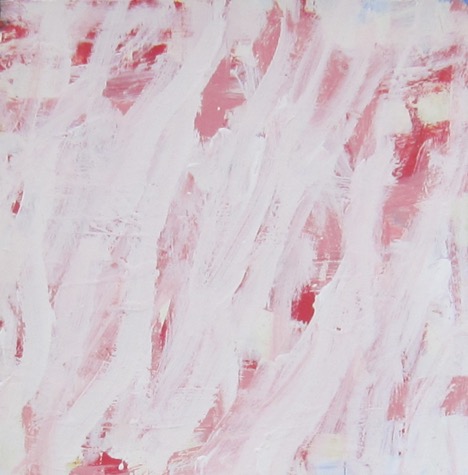
Doug Purnell - Echoes (59cm x 59 cm acrylic on paper).jpg
Doug Purnell, ‘Echoes’ (59cm x 59cm. Acrylic on paper)

I have been trying to articulate how for me as a pastoral theologian the primary text is lived experience. I hold that in conversation with received tradition (which I am asking a lot of questions about), through an act of the imagination, the work of artists, and seeking to discern the voice of God breaking into our world in fresh ways. That is what I feel called to as artist, so I am not trying to represent surfaces, but, with integrity, to create works that are open to the mystery of what is beyond our immediate grasp.

I want to share with you an experience of working alongside my two granddaughters in my art studio. Before they arrived, I cleaned up the mess and made a space for them to work. On the beach last week, I had found a 3–4” long and perfectly formed shell. So I put it out for them, gave them a big piece of board (about 70 x 70 cms) and a pencil, and asked them to draw a big picture of the shell. Pollyanna is 10 and Darby 7. They made their drawings and I put out some paint. I put out a couple of buckets filled with brushes of all sizes and shapes, including dish mops and scrapers. Pollyanna began with a big 7 centimeter brush, painting the background in multiple colours, and Darby began painting the shell. Intriguingly, the shells remained part of their composition, but were not the focus of their action. They began to play with the paint and the brushes and the mark making, and they both came up with interesting paintings. The shells were there, as part of the whole, but were not the main focus.

They wanted to do more paintings. Darby, who I always think has the mind spirit of the artist, found a tennis ball in one of the nearby boxes and asked if she could put paint on it. Then she wanted a large box so that she could put the paper in the box and roll the tennis ball covered in paint around in the box, ‘to see what happened’. She quickly changed to bouncing the paint-soaked tennis ball on the paper lying in the box, and forming a quality pattern in the bouncing of the ball. Pollyanna had her go, again having painted the background first. Nice, splurty, round marks. Then Pollyanna found a rubber wheel with corrugations in the rubber. I suggested making prints on the paper with it, and they were off on another stream of creating. I became intrigued with how they had begun with a specific task – to draw the shell – and had, in a short time, moved into a playful extension that was free, expressive, energetic, and poetic.

Later in the day, I was watching a documentary from 1973 on Painters Painting. Barnett Newman was ruminating on whether painting focuses on the objects painted as the subject of the painting, and whether the subject of a painting could be more than the objects within it. He talked about Cezanne’s apples. Are they the subject of the painting, or simply objects within the painting? He saw them as being like cannon balls, and the painting was much more than the objects depicted within it. What my granddaughters did yesterday was to begin their paintings with an object – the shell. And quickly their processes moved from the shell as the object and subject of the painting to the painting as a process that was more than depicting the shell. That transition – from an object being depicted, to a painting being created – was a very significant step that seems to reflect my own processes as an artist. I sit in the landscape for solid periods. I look and draw and scribble and play and reflect on the object of the landscape. And then I come back to my studio and I play, and I hope that by engaging the process I might make works that go beyond the object of land or face or whatever. It was intriguing to observe and reflect on their processes.

℘℘℘℘

Doug Purnell is a pastoral theologian who in his retirement is focusing on a commitment to a full-time studio practice of painting that explores the nature of abstraction and mark making. He was for 17 years the director of the Blake Prize for Religious Art. He lives and paints on Gadigal land.

Reading: a shortcut to compassion

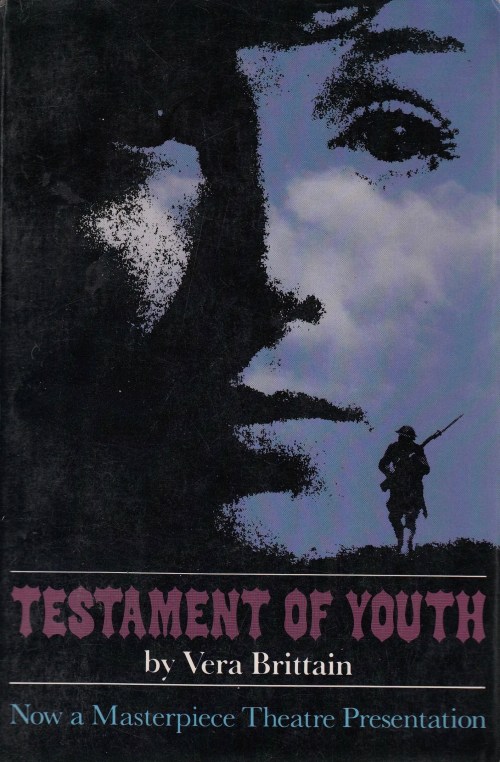
Testament.jpeg

You could argue that the most important value in life is compassion. You could also argue that the most painless way of growing compassion is by reading other people’s stories.

An ancient copy of Testament of Youth, the 1933 best-seller by Vera Brittain, has sat on my bookshelf for decades, surviving any number of culls of varying degrees of brutality, maybe because I knew at some level that this was a classic that I really should read one day. But it wasn’t until my interest had been sparked by seeing the latest movie version of this tale that I got around to picking it up.

This memoir of the years between 1914 and 1925, the decade containing World War I, cannot be rushed. It was written in an era when, harsh and full as life was, a writer seemed to have all the time in the world to explain things in great detail. It’s not for one minute boring, it just takes a while to read it.

Brittain tells the story of her harrowing war experience. A bright young woman who fought fiercely for the right to attend Oxford, her sheltered upper-middle-class English world was thrown into chaos by the war. All the people she was close to were killed and she worked for years as a highly capable VAD (Voluntary Aid Detachment) nurse in various wartime hospitals, including right behind the front lines in France.

Brittain went on to become a well-known novelist, poet, and public speaker; feminism and pacifism were the causes dear to her heart. She belonged to that generation that believed, for a little while, that they could shape the world so that it learnt the lessons of the ‘War to end all Wars’ which turned out, of course, to be nothing of the sort. At the end of the book, she laments the fact that more horrific conflict is on the horizon, that her children will be exposed to carnage of the sort she hoped to never witness again.

Brittain grew up at the end of the Victorian period, in a world of extraordinary privilege. Reading accounts of such lives, I always marvel at the leisure and boredom of the existence of comfortably off women whose job was simply to organise servants and go visiting. I look at my life and that of my peers, both women and men – we hold down jobs, bring up children, run households and fulfil community commitments without any assistance from servants whatsoever. Not that I would swap – Brittain’s struggle was largely one to escape precisely such a set up.

Nothing enables me to live in worlds other than my own more than good writing. Brittain’s devastation as one after another of her beloved peers are killed is heart-rending. She talks about her ‘doomed generation’, and they were. I cannot begin to imagine the weight of grief upon grief that most people suffered in those years, although several contemporary situations compare – families of asylum seekers the world over, certain Indigenous communities, nations like Syria and the Sudan in an ongoing state of conflict. I belong to a generation who has never had to live through war. My parents’ generation, on the other hand, lived not only a through war but through six long years of the terror of fearing that barbarism might well take over the world. We live in complicated times, with pressures our forebears cannot imagine, and the threat of global-warming is the greatest our planet and our race has ever known, but I cannot begin to imagine the sheer courage that women and men living through a war needed simply to get up each morning and face what had to be faced.

Testament of Youth is refreshing because it is a women’s war book, so, to this reader is infinitely more interesting than the many war tales penned by men. The experiences of women at home, making do despite war time shortages and waiting for the dreaded telegram that would tell them of the death of their husband/lover/father/brother/son are way beyond anything I have had to endure. The lives of nurses on the front lines were inhumanely exhausting and distressing as they dealt with daily carnage without benefit of much in the way of medical supplies or even clean water.

Another striking thing in this long tale is the very different style of relationships young people engaged in and the way letters formed the basis of how they became close. Brittain falls deeply in love with a young man and they become engaged, but they have only had a dozen or so times actually together, most of these accompanied by a chaperone. But the letters they wrote, sometimes several a week! A large part of her book consists of quotes from letters to and from her parents, her adored brother and her fiancé. They are long, poetic, honest, deep, philosophical, yearning. There was time to write this way, back then, war notwithstanding. Her brother Edward regularly scribbled pencilled notes from the trenches that made their way safely to his family; at one point he complains that it takes a day and a half for his letters to travel from the front line in France to his family in London. Australia Post eat your heart out!

They poured out their very souls in these letters, in a way that I suspect contemporary lovers rarely do with their instant messaging and their moving in together five minutes after they ‘hook up’. The sheer longing for each other in these epistles is a world away from the instant gratification we have come to expect in everything, including sex. I’m not wishing myself back there exactly – I do wonder how marriages panned out when these heightened times were over and a couple had to settle down to jobs and housework and the daily irritations that are a part of a long love. But the contrast with current practices is staggering.

Testament of Youth is a long, slow read, so exquisitely written that I wanted to savour every page. I loved Brittain’s acerbic humour and her fierce, unapologetic feminism (impressively, even after marriage, she kept the name of her family or origin) which is captured in such passages as this one, which litter the volume:

…all girls’ clothing of the period appeared to be designed by their elders on the assumption that decency consisted in leaving exposed to the sun and air no part of the human body that could possibly be covered in flannel. In these later days, when I lie lazily sunning myself in a mere gesture of a bathing suit on the gay plage of some small Riviera town – or even, during a clement summer, on the ultra-respectable shores of southern England – and watch the lean brown bodies of girl-children, almost naked and completely unashamed, leaping in and out of the water, I am seized with an angry resentment against the conventions of twenty years ago, which wrapped up my comely adolescent body in woollen combinations, bulky cashmere stockings, ‘liberty’ bodice, dark stockinette knickers, flannel petticoat and often, in addition, a long-sleeved, high-necked, knitted woollen ‘spencer’.

They don’t write like that anymore.

Reading Testament of Youth powerfully strengthened my conviction that entering another’s world, by engaging deeply with stories not our own, brings a compassion, sympathy, learning, and wonder more effectively than just about anything else. If Hitler had read The Diary of Anne Frank. If Trump could read – really read – the stories of people desperately fleeing across the Mexican border. If Peter Dutton could immerse himself in a book written by an asylum seeker. If Scott Morrison could get into a story of someone who has never had quite enough money to buy their kids shoes or go on a decent holiday. If Harvey Weinstein could read a book about a woman who has been sexually exploited. If we could, all of us, read and weep, read and resolve to never let carnage and abuse happen again, read and feel compassion for our planet and its people. Read.

℘℘℘℘

Clare Boyd-Macrae is a Melbourne writer and editor. She lives and works on Wurundjeri land.
The Diggers’ Requiem, Tears and Blood

IMG_2411.jpegThe interview was well underway when I tuned into the car radio. A man spoke about weeping every day, how he’d got used to the weeping in the time he’d been researching the First World War. He also said he seemed to be bleeding a lot; he kept cutting or scraping himself. Tears and blood.

I pulled the car over and listened. The ABC’s Myf Warhurst was interviewing Christopher Latham, artist-in-residence for the Australian War Memorial. He is a classical musician, she was slightly out of her comfort zone. Latham was introducing ‘The Diggers’ Requiem’, which brings together the work of composers past and present. Latham had been researching music from the era of the War and had also commissioned new pieces. While I sat parked at the side of the road, a piece by Elena Kats-Chernin poured through the car speakers. It was so beautiful, I decided I would go to the performance at St Pauls Cathedral in Melbourne a couple of nights later.

It was the end of September. I went alone to St Pauls, entering the expectant quiet of the gathered crowd in the Cathedral. I wanted my experience to be unmediated. I wanted to hear for myself what the weeping bleeding man had brought together. I took my seat and waited.

The first movement was Handel’s ‘Dead March’– now arranged with four voices and a piano accordion. Such an intriguing arrival, as the four singers and the accordion player stepped up the central aisle in a dirge-like procession. The sound came like a slow-rolling wave of deep sorrow. I wept as they approached, holding before them the familiar round metal helmets of First World War soldiers, they stepped gravely forward.

The evening did not disappoint. Latham had taken a variety of compositions and woven something seamless and whole. It was a work made with love. At the end, he turned to the gathered audience and invited us to join in a chant of the words ‘Pie Jesu’, all sung on one note.

Latham made one beautiful, telling stumble. When he was conveying the words, printed in the program as ‘Grant us eternal peace’, he said ‘Grant us the strength for peace.’ Indeed.

Later, when searching for more information about ‘The Diggers’ Requiem’ and Christopher Latham, I found his own words which echo this prayer that we might find the strength for peace. Latham writes:

After 15 years of living with this music of war, I see that the musical works created in the battlefields are an attempt to leave some trace of consciousness and memory in the face of erasure, and that these pieces have something important to teach us…

I wish to harvest these beautiful flowers from the past, to give voice to these buried experiences, so that we understand more clearly the cost of war and become more resolved to achieving a lasting peace.

There have since been performances in Canberra and Sydney. And as the 100-year anniversary is now being marked, there will be full resonance for Latham’s words and music, made with tears and blood.

℘℘℘℘

Julie Perrin is a Melbourne writer, oral storyteller, and Associate Teacher at Pilgrim Theological College, University of Divinity. She lives and works on Wurundjeri land.


Altar/d

During 2018, Adamstown Uniting Church played host to the Altar/d Art Installation series curated by Rod Pattenden, who is also the minister of the Church situated in Newcastle, NSW. The title of the series was a play on the words ‘altar’ and ‘alter’, and invited responses about change, transformation, and hope. Six artists were chosen to display work in the body of the church and to take on its architectural form while continuing the interests of their own practice. In this video, Rod Pattenden highlights the features of each artist’s work and the responses they found among the ‘congregation’ of viewers. The video was produced by John Cliff.